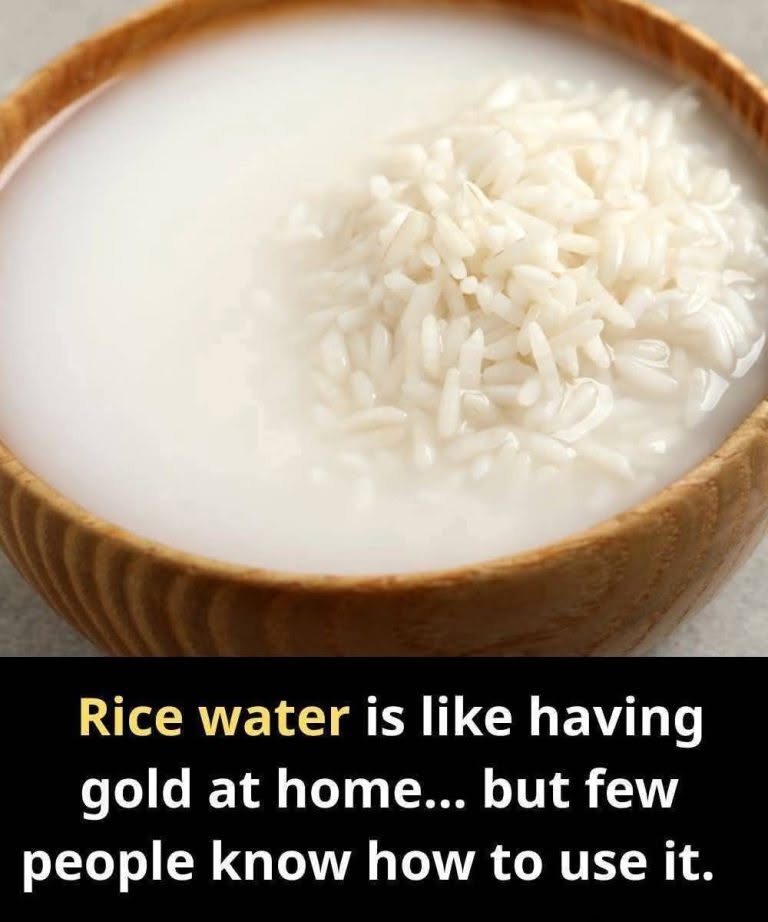
The claim “Rice water is like having gold at home” is an exaggeration, but rice water does have a few practical uses. It isn’t a miracle product, and many of the health claims you see online are not well supported by research.
Here are some common uses:
For plants
- Cooled, unsalted rice water can provide small amounts of nutrients and starch.
- Use it occasionally rather than every time you water, as too much starch can encourage mold or attract pests.
For hair
- Some people use rice water as a hair rinse because it contains starch and compounds such as inositol.
- It may make hair feel smoother or easier to detangle, but evidence for improving hair growth is limited.
- Rinse it out if it leaves hair feeling stiff or causes buildup.
For skin
- Some people use plain rice water as a gentle cleanser or soothing rinse.
- Scientific evidence for major skin benefits is limited, and it may not suit everyone.
For cooking
- Rice water can be used in some soups, stews, or bread recipes to reduce waste.
Safety tips
- Use plain rice water without salt or seasonings.
- Refrigerate it and use it within 1–2 days.
- Discard it if it develops an off smell or signs of fermentation (unless you intentionally fermented it for cosmetic use).
Rice water can be a useful household by-product, but it isn’t a cure-all or a substitute for proven medical or skincare treatments.
