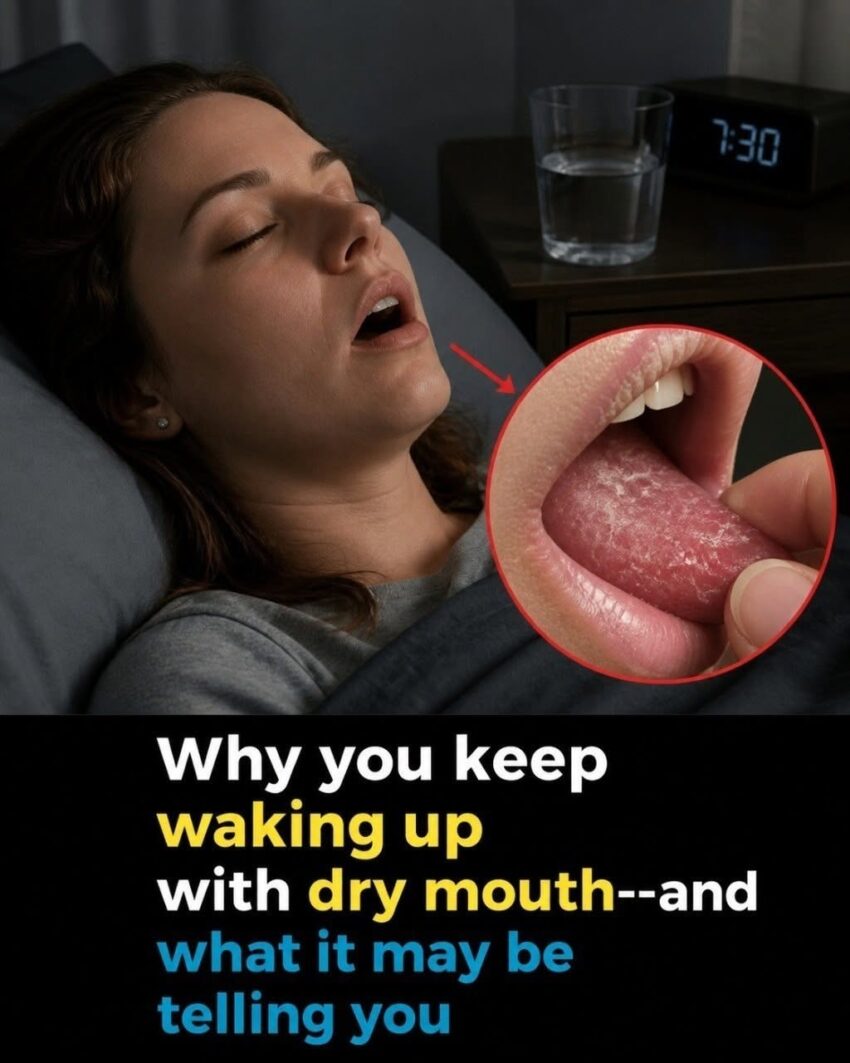
Waking up with a dry mouth is common, and there are several possible reasons. While it’s often harmless, persistent dry mouth can sometimes signal an underlying health issue.
Some common causes include:
- Mouth breathing during sleep, often due to nasal congestion, allergies, or snoring.
- Dehydration, especially if you didn’t drink enough fluids the day before.
- Medications, such as antihistamines, antidepressants, blood pressure medications, and some pain relievers, which commonly reduce saliva production.
- Dry air in the bedroom, particularly during winter or in air-conditioned environments.
- Aging, as saliva production may decrease and medication use often increases with age.
- Certain medical conditions, including Diabetes mellitus, Sjögren syndrome, or Obstructive sleep apnea, can also contribute to dry mouth.
Things that may help:
- Drink enough water throughout the day.
- Avoid alcohol and tobacco, especially before bedtime.
- Use a humidifier if your bedroom air is very dry.
- Treat nasal congestion if it’s causing mouth breathing.
- Chew sugar-free gum or suck on sugar-free lozenges during the day to stimulate saliva (if appropriate).
You should consider seeing a healthcare professional if:
- Dry mouth persists for several weeks.
- It’s accompanied by difficulty swallowing, frequent cavities, mouth sores, or a burning sensation in the mouth.
- You also have symptoms such as excessive thirst, frequent urination, loud snoring with pauses in breathing, or dry eyes, as these may point to an underlying condition.
Dry mouth is a symptom rather than a diagnosis, so the best treatment depends on identifying the underlying cause.
