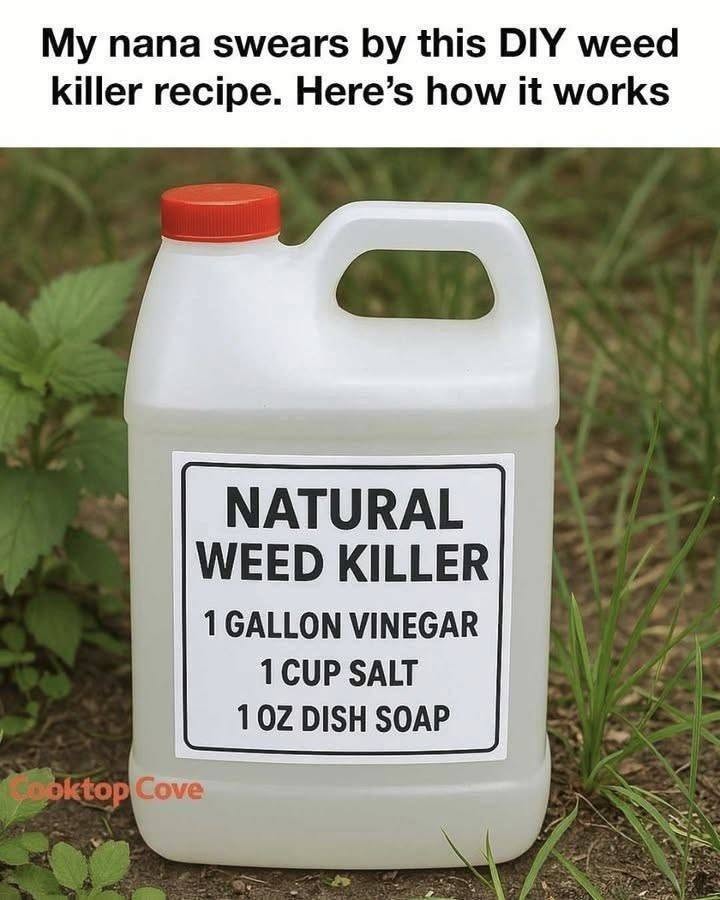
DIY weed-killer recipes are popular because many use simple household ingredients, but claims that one recipe will kill all weeds permanently are usually exaggerated.
A common homemade weed killer is:
Vinegar-based spray
- White vinegar (often higher-strength horticultural vinegar is used for better results)
- A small amount of dish soap (helps the liquid stick to leaves)
How it works:
- The vinegar’s acidity can burn and dry out the leaves of many weeds.
- It works best on young, small weeds on sunny days.
- It often does not kill deep roots, so perennial weeds may grow back.
Important cautions:
- Avoid spraying it on lawns, flowers, vegetables, or plants you want to keep—it can damage them too.
- Repeated use of strong vinegar can affect soil organisms and nearby plants.
- Salt-based weed recipes can create longer-lasting soil problems and are generally not recommended in garden beds.
For fewer weeds long term, the most reliable methods are:
- Mulching to block sunlight.
- Removing weeds before they produce seeds.
- Pulling or digging out deep-rooted weeds.
- Choosing a weed-control method appropriate for the specific area.
If you share the exact “nana’s recipe” (ingredients and amounts), I can explain whether it’s likely to work and where it’s safe to use.
