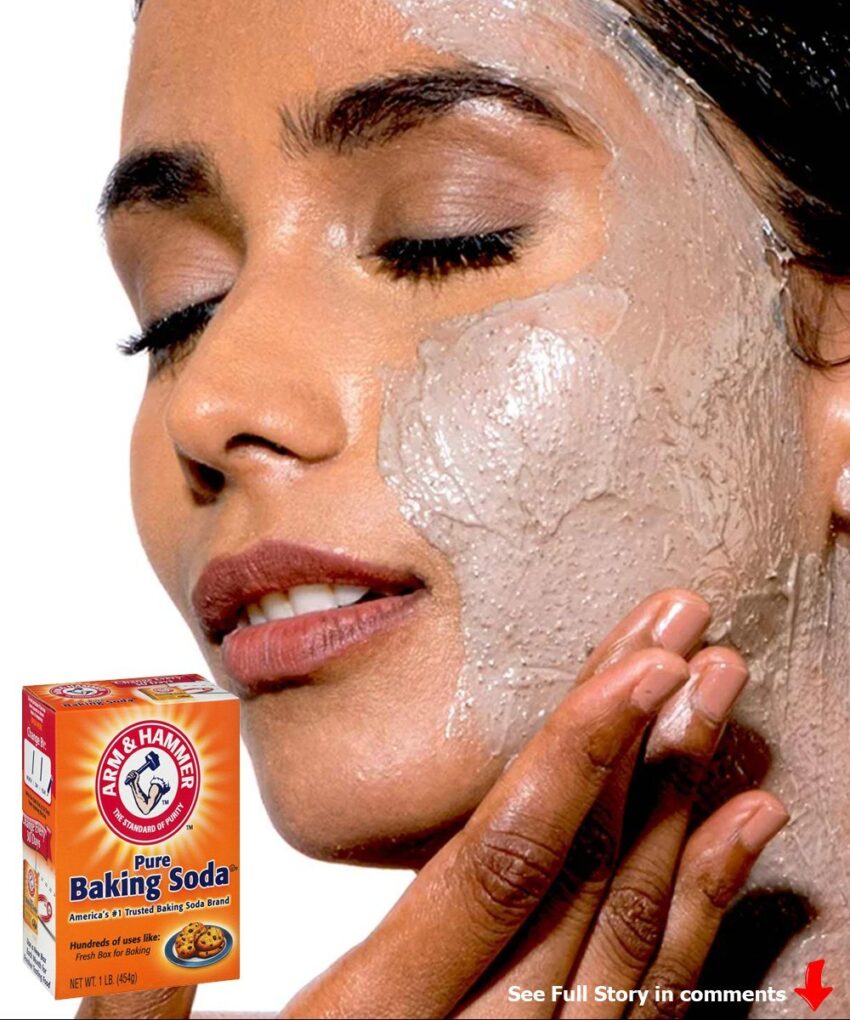
It’s totally normal for older generations to swear by simple home remedies — baking soda was a go-to “beauty trick” for decades.
But while it can create certain temporary effects on the skin, it also comes with real risks, so I’ll explain:
1️⃣ the 3 common ways people use baking soda on the face
2️⃣ exactly how those methods work
3️⃣ why dermatologists recommend caution
4️⃣ safer alternatives that give the same benefits without damaging skin
🧂✨ 1. Baking Soda Face Scrub (Exfoliation)
How Nana uses it:
Mixes a small amount of baking soda with water to form a paste, then gently rubs it on the skin.
Why she thinks it works:
-
The fine particles feel like a gentle exfoliant.
-
Skin feels smoother immediately after.
What’s actually happening:
-
Baking soda is abrasive, so it physically removes surface dead skin.
-
It also temporarily neutralizes oils, making skin feel clean and matte.
Dermatology reality:
-
It disrupts your skin’s natural pH (baking soda is very alkaline).
-
This can weaken the skin barrier, cause micro-tears, and increase dryness or irritation.
🧂💧 2. Spot Treatment for Pimples
How Nana uses it:
Makes a thick paste and dabs it directly on breakouts.
Why she thinks it works:
-
Dries out the pimple
-
Reduces oil at the surface
-
Sometimes reduces redness temporarily
What’s actually happening:
-
Baking soda pulls water and oil from the skin (“drying effect”).
-
Its alkalinity reduces inflammation briefly.
Dermatology reality:
-
Over-drying leads to rebound oil production, clogged pores, and skin irritation.
-
Regular use can worsen acne.
🧂🧖♀️ 3. Baking Soda + Water “Brightening” Mask
How Nana uses it:
Spreads a thin layer of the paste over the face, leaves it on a few minutes, then rinses.
Why she thinks it works:
-
Skin looks a little brighter and smoother right after
-
Makeup goes on more evenly
What’s actually happening:
-
Dead skin cells are being stripped
-
Surface oils are being removed
-
The skin may look brighter because it is temporarily irritated/swollen at a microscopic level
Dermatology reality:
-
This pH disruption can damage the moisture barrier
-
Can create redness, sensitivity, and long-term dryness
⚠️ The Big Issue: Baking Soda’s pH is ~9. Skin’s Natural pH is ~4.5–5.5
That jump is huge.
Over time, it can cause:
-
dryness
-
irritation
-
redness
-
worsening breakouts
-
impaired protective barrier
So: It works… but at a cost.
✅ Safer Alternatives That Give the Same Benefits
For exfoliation:
-
AHA (lactic or glycolic acid) toner 1–2× weekly
-
Very gentle enzyme exfoliants (papaya, pumpkin)
For acne spot treatment:
-
2% salicylic acid
-
Benzoyl peroxide 2.5%
-
Sulfur spot treatments (gentle and effective)
For brightening masks:
-
Clay masks (like kaolin)
-
Vitamin C serums
-
Rice water masks
These do what baking soda tries to do — without the damage.
🧡 If You Still Want to Honor Nana’s Routine
Some people like the nostalgia or occasional use. If so, keep it rare (no more than once a month) and follow with:
-
A gentle cleanser
-
A soothing moisturizer
-
A barrier-repair product (ceramides, niacinamide)
If you want, I can also:
✨ Make you a safer “Nana-inspired” 3-step routine
✨ Compare baking soda to apple cider vinegar skincare (another old-school remedy)
✨ Create a simple routine for sensitive, oily, or acne-prone skin
What would you like?
