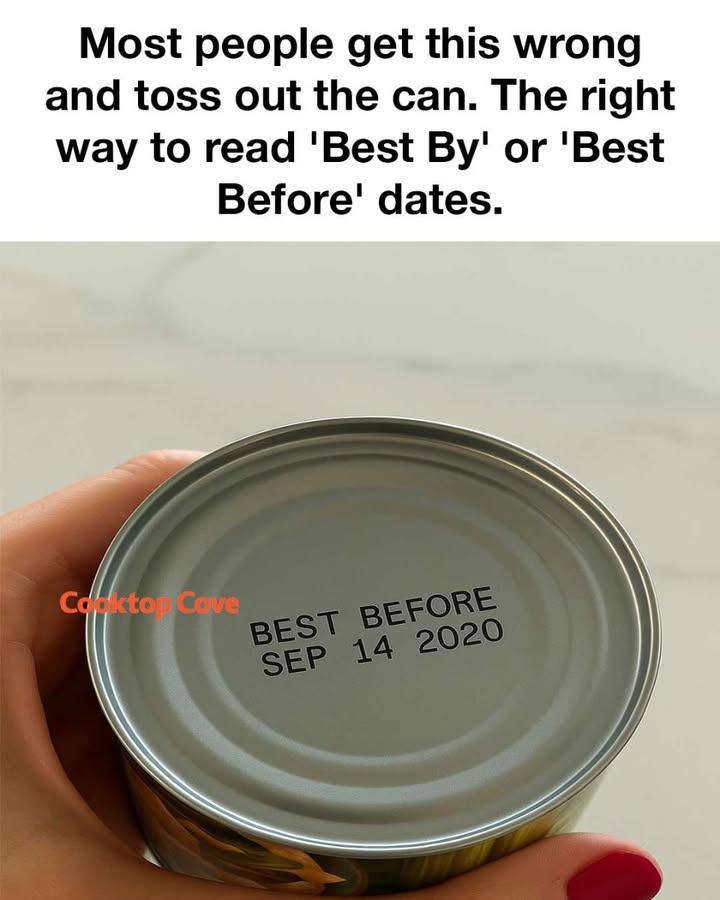
You’re right — most people misunderstand “Best By” / “Best Before” dates and throw away perfectly good food. Here’s the correct, simple way to read them 👇
What “Best By” / “Best Before” REALLY Means
It is about QUALITY, not SAFETY.
Manufacturers use these dates to indicate:
- Best flavor
- Best texture
- Best freshness
👉 Food does NOT automatically become unsafe after this date.
What the Different Labels Mean
✅ Best By / Best Before
- Food is still safe after the date
- Quality may slowly decline
- Very common on canned, boxed, and packaged foods
Examples:
Canned soup, pasta, cereal, rice, chips, frozen foods
⚠️ Use By
- Safety-related (mostly for highly perishable foods)
- Found on fresh meat, dairy, ready-to-eat foods
- Should be taken more seriously
🏭 Sell By
- For store inventory, not consumers
- Food is usually good days or weeks after
Canned Food: The Biggest Misunderstanding
Unopened canned food can last YEARS past the “Best By” date if:
✔ Stored in a cool, dry place
✔ Can is not bulging, leaking, or rusted
Rule of thumb:
- Low-acid foods (beans, soups, vegetables): 3–5 years past date
- High-acid foods (tomatoes, fruit): 1–2 years past date
When to Throw Food Away (Date or Not)
🚫 Always discard if you notice:
- Bulging or swollen cans
- Leaks or spurting liquid
- Mold (except on hard cheese — that’s different)
- Strong sour or rotten smell
- Slimy texture on meat or deli items
👉 Your senses matter more than the printed date.
Why This Matters
- The average household wastes hundreds of dollars yearly on edible food
- Date confusion is a major contributor to food waste
- Proper understanding = safer choices and savings
Bottom Line
“Best Before” = best quality, not expiration
Don’t toss food just because the date passed — check it first
If you want, I can share:
- A food-by-food cheat sheet
- How long leftovers actually last
- Freezer vs fridge storage rules
Just tell me 🍽️
