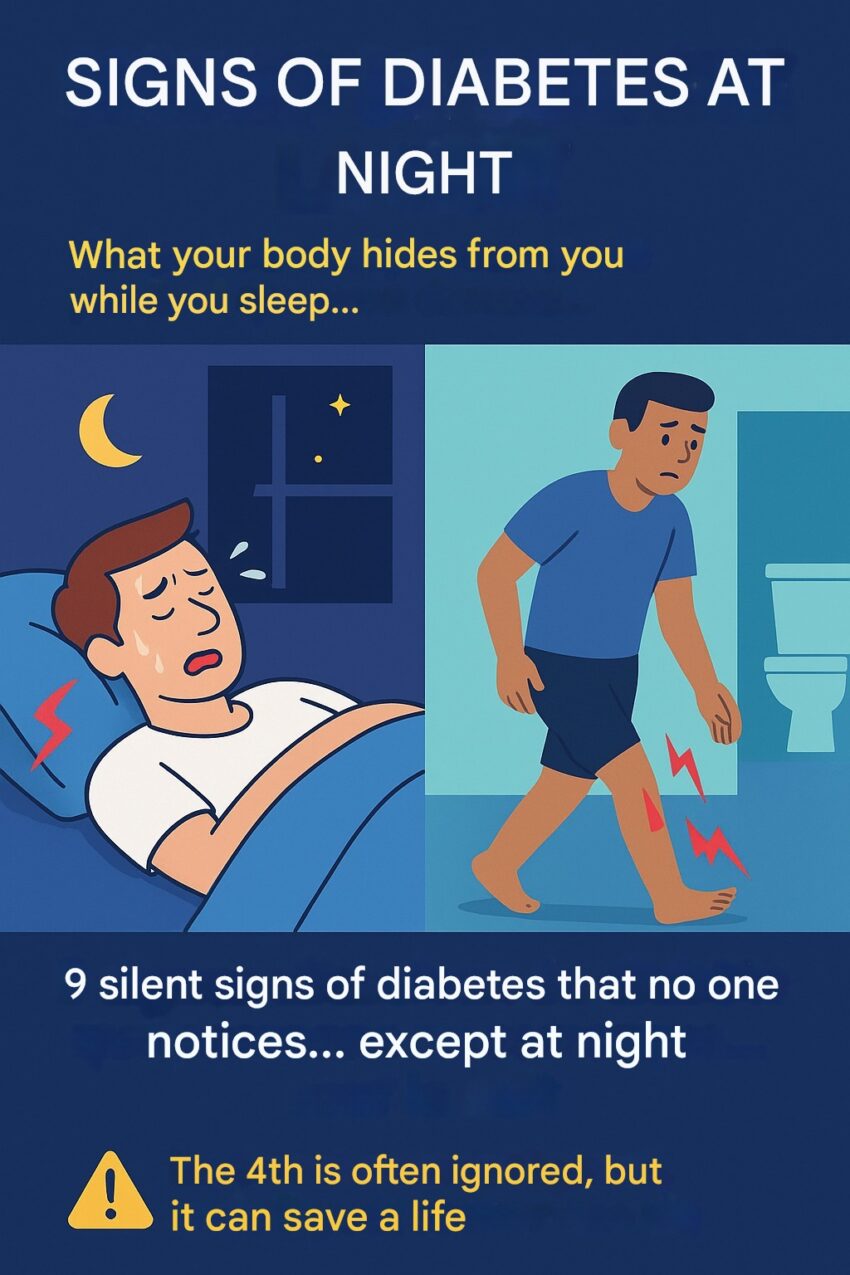
Here is a clear, medically accurate, and non-alarmist guide. These signs do not mean you have diabetes, but if they happen often or together, they’re worth checking—especially overnight symptoms are easy to miss.
9 Signs of Diabetes That Appear at Night
Diabetes affects how your body handles blood sugar, and changes in glucose levels often become noticeable during sleep.
1. Frequent Nighttime Urination (Nocturia)
High blood sugar makes the kidneys work harder, pulling extra fluid from your body—causing repeated trips to the bathroom at night.
2. Excessive Thirst at Night
You may wake up with a dry mouth or strong urge to drink water due to dehydration from high glucose levels.
3. Night Sweats
Low blood sugar (especially in people already on diabetes medication) can cause sweating, clammy skin, or soaked sheets.
4. Restless or Poor Sleep
Blood sugar fluctuations can disrupt sleep cycles, making it hard to stay asleep or feel rested.
5. Tingling, Burning, or Numbness in Feet or Legs
Known as diabetic neuropathy, these sensations often worsen at night when distractions are gone.
6. Leg Cramps or Aching
Circulation problems or nerve involvement linked to diabetes may cause nighttime leg pain.
7. Headaches on Waking
Can be related to high or low blood sugar levels during the night.
8. Snoring or Gasping for Air
Diabetes is strongly linked with sleep apnea, which often becomes noticeable during sleep.
9. Fatigue Despite a Full Night’s Sleep
If blood sugar levels are unstable overnight, you may wake feeling exhausted even after 7–8 hours of sleep.
Important Perspective
- Many of these symptoms also occur with aging, stress, menopause, medications, or dehydration
- One symptom alone is rarely diabetes
- Risk increases if you also have:
- Overweight
- Family history
- High blood pressure
- Prediabetes
When to Get Checked
Consider blood sugar testing if nighttime symptoms are:
- Frequent (several nights a week)
- Getting worse
- Combined with daytime signs like fatigue, blurry vision, or slow healing
Simple tests (fasting glucose, HbA1c) can give clear answers.
Bottom Line
Nighttime symptoms can be early clues, but diabetes is diagnosed with blood tests—not symptoms alone. Early detection makes management much easier and safer.
If you’d like, I can:
- Explain how to tell high vs. low blood sugar at night
- Share nighttime habits that stabilize glucose
- Create a simple diabetes-friendly evening routine
Just tell me how you’d like to continue.
