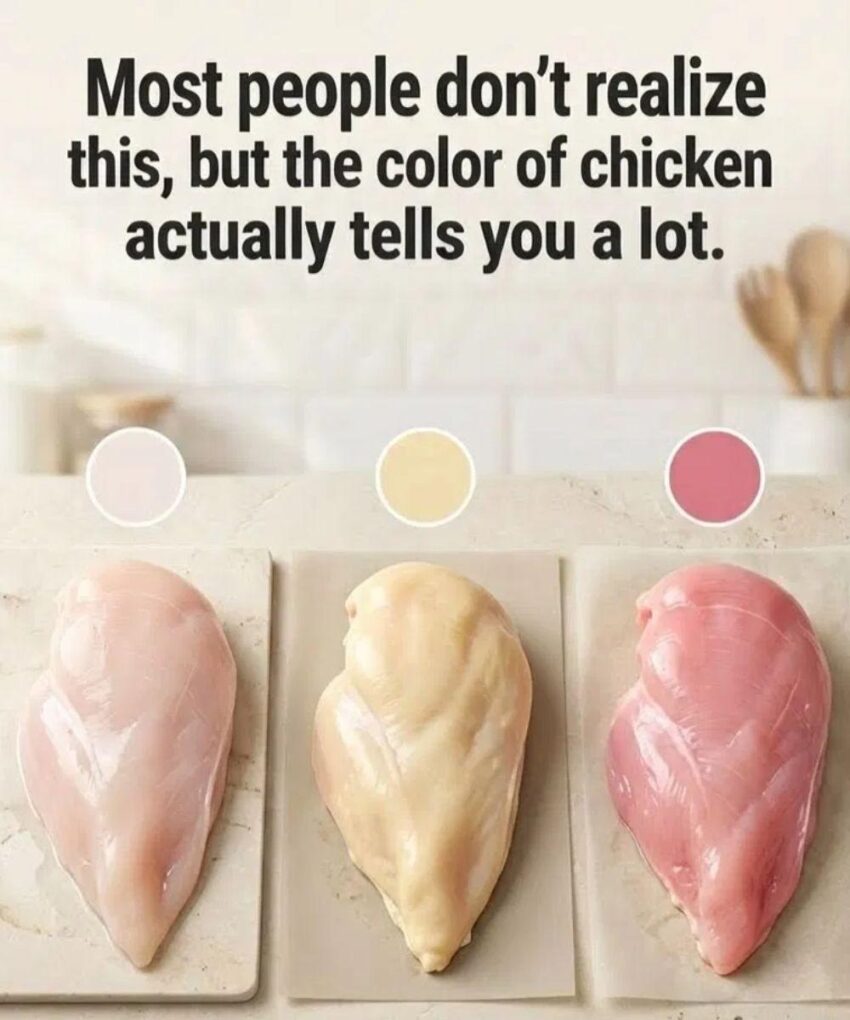
Ah, yes! This is a surprisingly common point of confusion in cooking and grocery shopping. Let’s break it down clearly. 🐔
Chicken Color vs. Quality: What You Need to Know
1. Skin and Meat Color
- Raw chicken can vary from pale pink to slightly yellow or darker shades.
- Skin tone may range from white to yellow, depending on:
- The chicken’s diet (corn-fed chickens often have yellower skin)
- Breed or genetics
- Age of the bird
2. Myth: Darker = Better or Safer
- Many people assume darker meat or skin means higher quality—but that’s not necessarily true.
- Color alone does not indicate:
- Freshness
- Nutritional value
- Taste or tenderness
3. Signs of Chicken Quality
Focus on smell, texture, and appearance rather than color alone:
- Fresh smell: Should be neutral, not sour or ammonia-like
- Firm texture: Meat should spring back when pressed
- Moist, not slimy: Excess slime is a warning sign
- Packaging: Check expiration or sell-by dates
4. Cooked Chicken Color
- Cooked chicken should reach 165°F (74°C) internally.
- Cooked meat will turn white (breast) to slightly pinkish-brown (thighs)
- Slight pink in cooked dark meat can be normal, especially in younger birds
Bottom Line
- Raw chicken color varies naturally—it’s not a reliable measure of quality or safety.
- Always check freshness, smell, and proper storage.
- Cooking thoroughly is the most important factor for safety.
If you want, I can make a quick visual guide: “How to judge chicken quality at the store and at home”—so you never second-guess whether it’s safe or tasty again.
Do you want me to do that?
