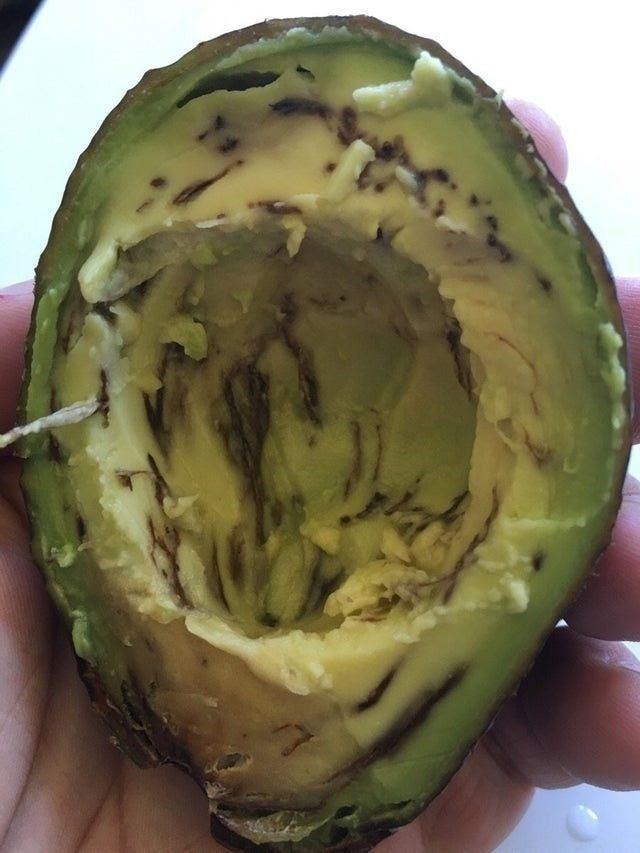
How to Tell if an Avocado Is Safe
1. Check the outside
-
Good: Dark green to nearly black (for Hass), no large soft or sunken spots
-
Not good: Deep dents, cracks, or areas that feel mushy → likely spoiled inside
2. Do the gentle squeeze
-
Ready to eat: Yields slightly to pressure
-
Underripe: Rock hard
-
Overripe: Very soft or collapsing → discard
(Don’t press with fingertips—use your palm to avoid bruising.)
3. Pop off the stem
-
Green underneath: Perfectly ripe
-
Yellow-brown: Still okay, eat soon
-
Dark brown or moldy: Throw it out
4. Look inside after cutting
-
Okay to eat:
-
Light green or creamy yellow flesh
-
A little browning is fine—just scoop it away
-
-
Not safe:
-
Gray, stringy, or sour-smelling flesh
-
White or fuzzy mold → discard the whole avocado
-
5. Smell it
-
Fresh: Mild, clean scent
-
Spoiled: Sour, rotten, or chemical smell → don’t taste it
6. Taste test (only if all signs look good)
-
A tiny bite should taste mild and nutty
-
If it’s bitter or sour, spit it out and discard
Storage tips
-
Store unripe avocados at room temp
-
Once ripe, refrigerate to slow spoilage
-
Cut avocado: sprinkle with lemon/lime juice, cover tightly, refrigerate
If you want, I can also explain black spots vs spoilage, how to ripen faster, or how long cut avocado lasts.
