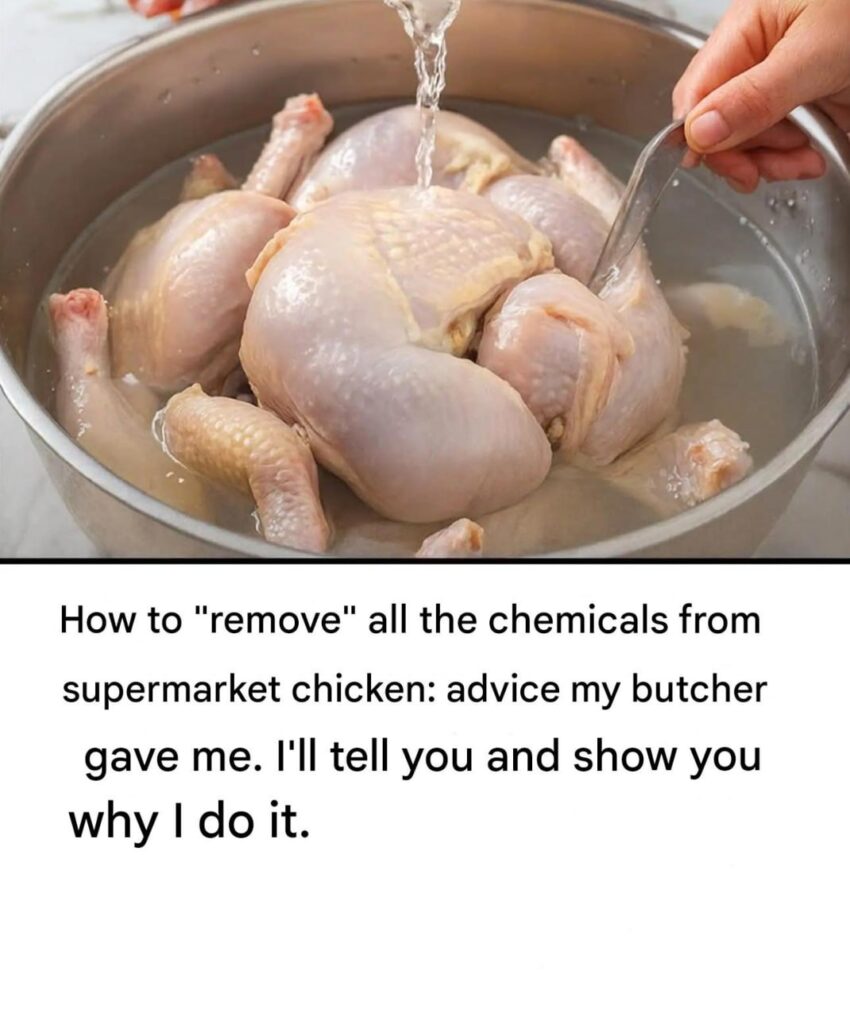
The idea that you can “remove chemicals” from supermarket chicken at home is mostly misleading. There isn’t a proven method to detox or wash out chemicals that are supposedly “inside” the meat.
But I can explain what’s real, what’s myth, and what you can actually do safely.
🍗 First: are supermarket chickens full of chemicals?
In most countries, chicken sold in supermarkets is regulated and inspected. It may contain:
- Trace residues of approved veterinary drugs (within legal limits)
- Water retention solutions in some processed products
- Normal natural compounds from feed and farming
There is no evidence that chicken contains dangerous “hidden chemicals” that can be removed by home methods.
🚫 Myths about “detoxing chicken”
You may see claims like:
- Soaking in salt, vinegar, or lemon removes chemicals
- Boiling removes toxins
- Washing with special solutions purifies meat
👉 Reality:
These methods may:
- Change surface bacteria slightly
- Affect taste or texture
- Reduce some surface residues
But they do not remove internal compounds or “detox” meat.
🧼 What actually helps food safety
1. Proper cooking (most important)
Heat is what makes chicken safe, not washing or soaking.
Cook until internal temperature reaches safe levels (about 75°C / 165°F).
2. Don’t wash raw chicken
Washing can:
- Spread bacteria around your kitchen
- Increase risk of contamination
3. Trim and choose wisely
- Remove excess skin or visible fat if preferred
- Buy from trusted sources with food safety standards
4. Simple brining (optional, not detoxing)
Soaking in salt water can:
- Improve texture and juiciness
- Slightly reduce surface odors
But it does not remove “chemicals” inside the meat.
🧠 The key truth
The most important safety step for chicken is not removing chemicals—it’s:
- Safe handling
- Proper storage
- Thorough cooking
🧭 Bottom line
There is no scientifically proven method to “remove chemicals” from chicken because the concern is largely based on exaggerated or misleading claims. What does matter is choosing good-quality meat and cooking it properly.
If you want, I can break down which food safety myths about meat are most common (and what science actually says about them)—there are quite a few viral ones.
