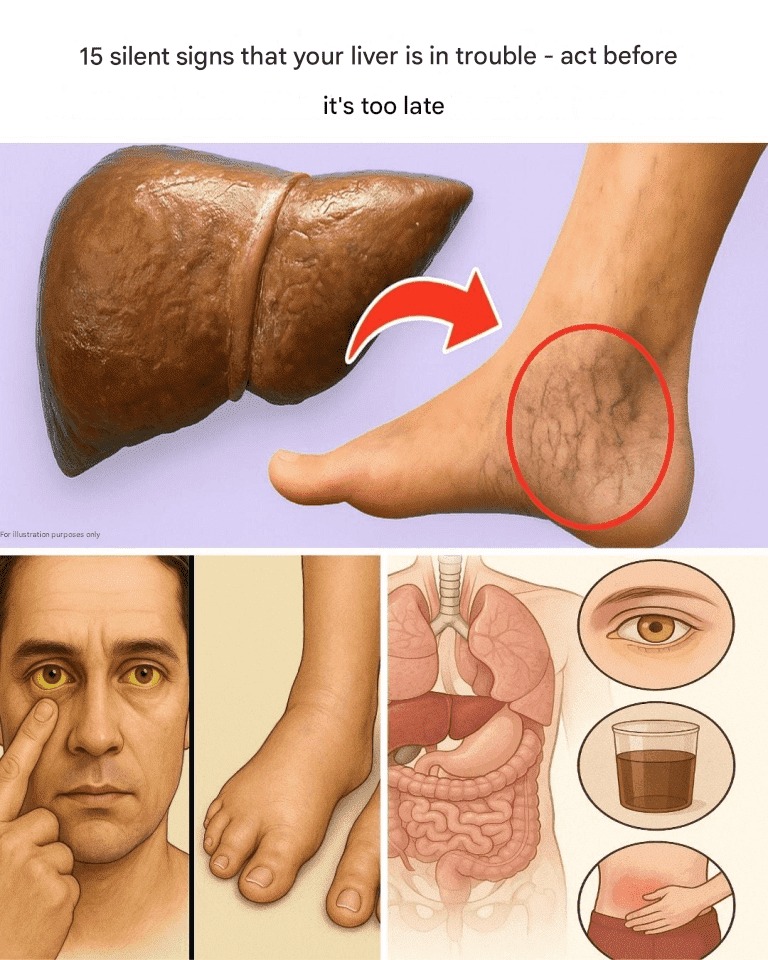
Here’s a careful look at silent signs that may indicate liver trouble. The liver is a resilient organ, so problems often show up subtly until damage progresses. Recognizing these early signs can help you seek medical evaluation before serious issues develop.
🩺 15 Silent Signs of Liver Stress or Disease
1. Fatigue & Weakness
- Persistent tiredness despite adequate sleep can signal the liver is overworked.
2. Digestive Issues
- Bloating, indigestion, or nausea after meals may indicate impaired bile production.
3. Loss of Appetite
- A sudden decrease in appetite or unexplained weight loss can be an early warning.
4. Dark Urine
- Concentrated, dark yellow or brown urine may result from bilirubin buildup.
5. Pale or Clay-Colored Stools
- Reduced bile flow can make stools unusually light in color.
6. Jaundice
- Yellowing of skin or eyes occurs when bilirubin accumulates.
7. Itchy Skin
- Cholestasis (bile buildup) can cause persistent itching without a rash.
8. Swelling in Abdomen or Legs
- Fluid retention may appear as abdominal bloating or ankle swelling.
9. Easy Bruising or Bleeding
- Liver produces clotting factors; dysfunction can make you bruise or bleed easily.
10. Brain Fog or Confusion
- Toxins normally cleared by the liver can affect cognitive function, leading to forgetfulness or difficulty concentrating.
11. Persistent Nausea or Vomiting
- Frequent nausea, especially in the morning, can indicate liver stress.
12. Spider Veins or Skin Changes
- Small, spider-like veins on the skin may appear with liver damage.
13. Chronic Bad Breath or Metallic Taste
- Liver dysfunction can alter digestion and toxin clearance, affecting taste and breath.
14. Mood Changes
- Anxiety, depression, or irritability can be linked to metabolic imbalances from liver issues.
15. Excessive Sweating & Body Odor Changes
- Toxin buildup can subtly alter body odor and increase perspiration.
⚠️ Important Notes
- These signs don’t automatically mean liver disease—other conditions can cause similar symptoms.
- Early detection matters: simple blood tests (liver function tests) and imaging can detect problems before irreversible damage occurs.
- Avoid self-diagnosis; see a hepatologist or primary care doctor if multiple signs appear.
🌿 Supportive Lifestyle Habits for Liver Health
- Eat a balanced diet rich in vegetables, whole grains, and lean proteins.
- Limit alcohol and avoid processed foods with excess sugar and unhealthy fats.
- Stay physically active to support metabolism and circulation.
- Avoid unnecessary medications or supplements that can strain the liver.
If you want, I can make a “liver-friendly daily routine” with foods, drinks, and habits to protect your liver before problems arise.
Do you want me to create that routine?
