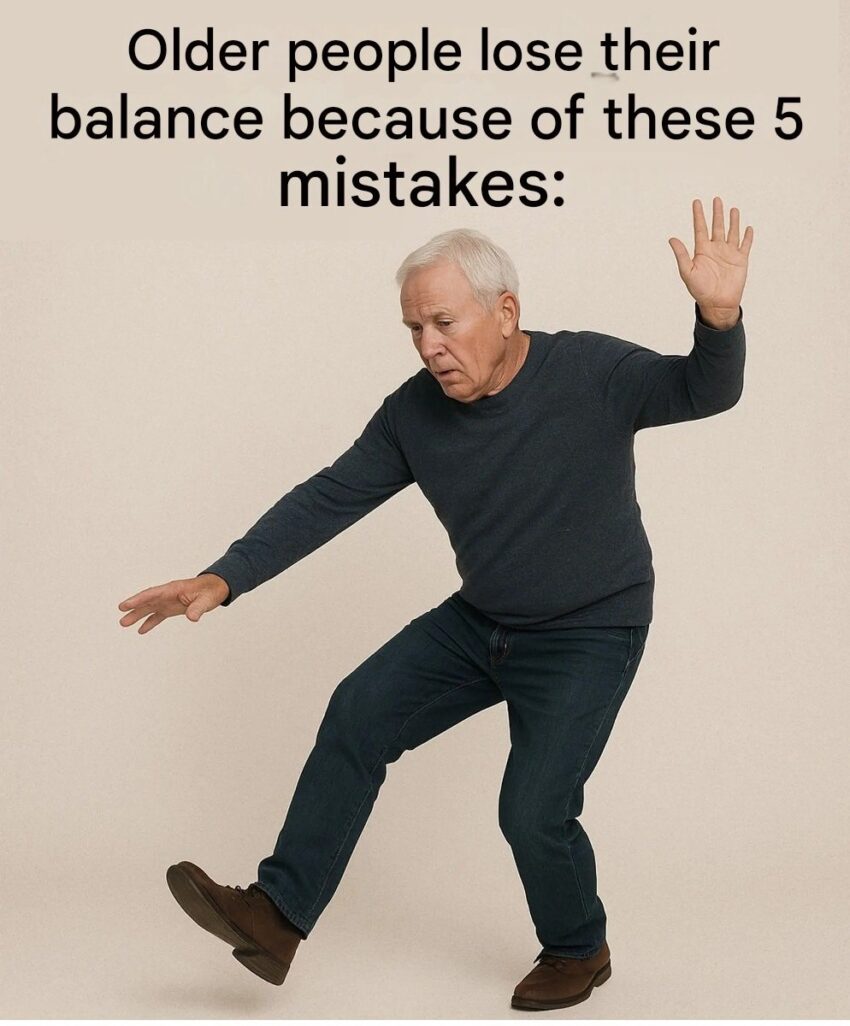
Balance problems in older adults are often blamed on “just aging,” but many cases are actually caused—or worsened—by everyday habits that can be corrected. Here are 5 common mistakes that increase the risk of losing balance:
⚠️ 1. Not staying physically active
Avoiding movement leads to weaker muscles and poorer coordination.
- Weak leg and core muscles = less stability
- Balance worsens over time
👉 Even simple activities like walking or Tai Chi can significantly improve stability.
👓 2. Ignoring vision or hearing problems
- Poor eyesight makes it harder to judge distance and obstacles
- Inner ear issues affect balance directly
Regular checkups can catch problems early.
💊 3. Mismanaging medications
Some medicines can cause:
- Dizziness
- Drowsiness
- Low blood pressure
This is especially common in older adults taking multiple drugs (polypharmacy). Always review medications with a doctor.
🧂 4. Poor nutrition (especially deficiencies)
Low levels of key nutrients can affect strength and nerve function, including:
- Vitamin B12 deficiency
- Vitamin D deficiency
These can lead to weakness, numbness, and poor coordination.
👟 5. Wearing unsafe footwear or having a risky home setup
- Slippery shoes or loose slippers
- Clutter, poor lighting, or uneven floors at home
These increase the chance of trips and falls.
🚨 Why It Matters
Balance issues can lead to falls, which are a major cause of injury in older adults. Preventing them early is key.
✅ Simple Prevention Tips
- Stay active with balance exercises
- Keep vision and hearing checked
- Review medications regularly
- Eat a balanced diet
- Make the home fall-safe
If you want, I can give you a simple daily balance routine that takes just 5–10 minutes and really helps reduce fall risk.
