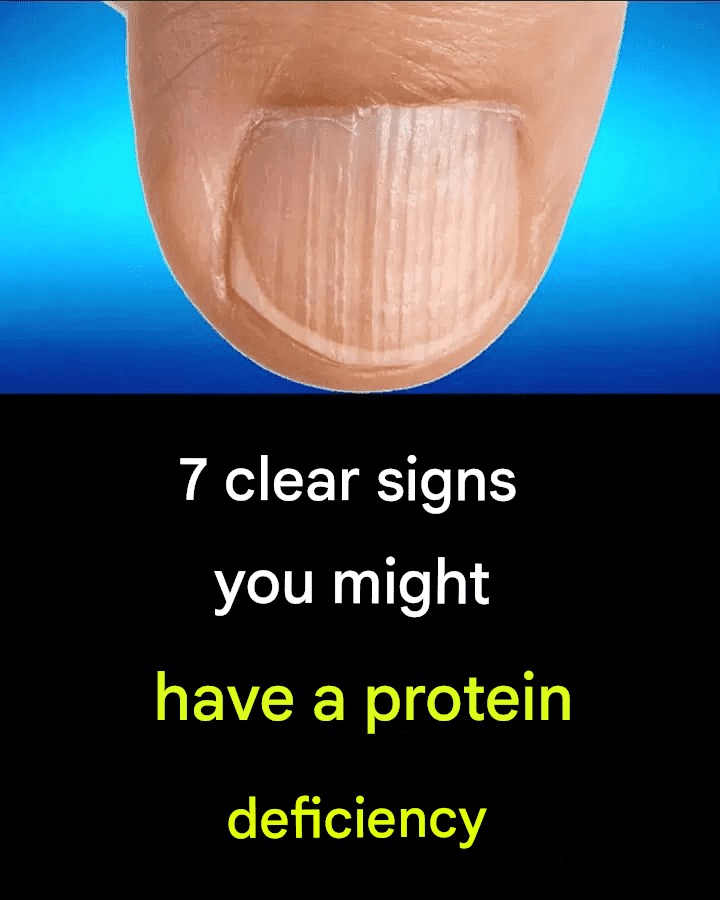
Protein deficiency is rare in most people who eat a normal diet, but it can happen in cases of poor intake, certain medical conditions, or long-term malnutrition. The signs are often gradual and not specific on their own.
Here are 7 possible signs that may suggest low protein intake:
1. 🦵 Muscle weakness or loss
Protein is essential for maintaining muscle.
- You may feel weaker than usual
- Muscle tone may decrease over time
- Recovery from exercise feels slower
2. 🧴 Slow wound healing
Protein is needed to repair tissues.
- Cuts or injuries take longer to heal
- Skin repairs feel sluggish
3. 💇 Hair thinning or brittle hair
Hair is made largely of protein (keratin).
- Hair becomes thin, dry, or breaks easily
- Increased shedding may occur
4. 🧍 Swelling (especially in legs or feet)
Severe protein deficiency can lower blood protein levels.
- Fluid may leak into tissues
- This causes swelling called edema
5. 😴 Fatigue and low energy
Protein supports enzymes and hormone function.
- You may feel tired even with enough calories
- Weakness during normal activities
6. 🧠 Mood changes or brain fog
Low protein intake can affect neurotransmitter balance.
- Difficulty concentrating
- Irritability or low mood
7. 🍽️ Increased hunger or cravings
Protein helps you feel full.
- You may feel hungry soon after eating
- Craving frequent snacks or carb-heavy foods
⚠️ Important context
These symptoms can also be caused by many other things, such as:
- Iron deficiency
- Vitamin deficiencies
- Thyroid problems
- Poor sleep or stress
So they are not specific to protein deficiency alone.
🧠 Who is actually at risk?
Protein deficiency is more likely in:
- People with very limited diets
- Older adults with low appetite
- Certain digestive disorders
- Severe calorie restriction or malnutrition
🍗 Bottom line
True protein deficiency is uncommon, but low intake over time can affect muscle, skin, hair, and energy levels.
If you want, tell me your typical diet and I can estimate whether you’re likely getting enough protein or not.
