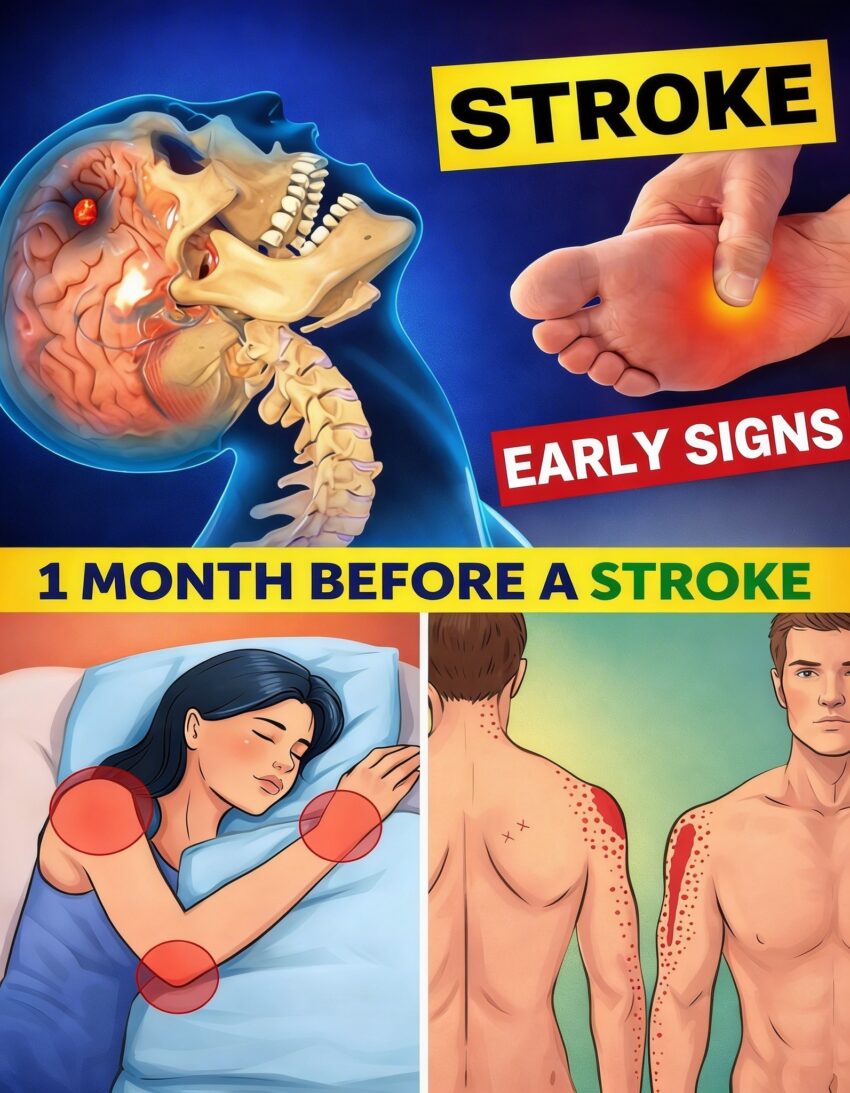
Stroke often seems sudden — but in some cases, the body gives early warning signs, especially if a person experiences a mini-stroke (TIA – transient ischemic attack) beforehand.
A TIA is sometimes called a “warning stroke” and should be treated as a medical emergency.
Below are possible warning signs and prevention tips.
⚠️ 8 Warning Signs That May Appear Before a Stroke
These symptoms can occur days or weeks before a major stroke — even if they go away quickly.
1️⃣ Sudden Weakness or Numbness
Especially on one side of the body (face, arm, or leg).
2️⃣ Brief Vision Problems
- Blurred vision
- Loss of vision in one eye
- Double vision
3️⃣ Difficulty Speaking
- Slurred speech
- Trouble finding words
- Confusion
4️⃣ Sudden Severe Headache
Especially if different from usual headaches and comes without warning.
5️⃣ Dizziness or Loss of Balance
Unexplained coordination problems or sudden falls.
6️⃣ Facial Drooping
One side of the face may appear uneven when smiling.
7️⃣ Short Episodes of Confusion
Temporary memory lapses or disorientation.
8️⃣ Brief Numbness That Resolves
Symptoms lasting minutes to hours and then disappearing may indicate a TIA.
🚨 Remember FAST
F – Face drooping
A – Arm weakness
S – Speech difficulty
T – Time to call emergency services immediately
Even if symptoms go away, seek urgent medical care.
🛡️ 9 Ways to Help Prevent Stroke
1️⃣ Control Blood Pressure
High blood pressure is the #1 risk factor.
2️⃣ Manage Diabetes
Keep blood sugar in a healthy range.
3️⃣ Lower Cholesterol
Through diet, exercise, and medication if needed.
4️⃣ Quit Smoking
Smoking significantly increases stroke risk.
5️⃣ Exercise Regularly
Aim for at least 150 minutes of moderate activity per week.
6️⃣ Maintain a Healthy Weight
7️⃣ Limit Alcohol
8️⃣ Eat a Heart-Healthy Diet
Focus on vegetables, fruits, whole grains, lean protein, and healthy fats.
9️⃣ Manage Atrial Fibrillation
Irregular heartbeat increases clot risk — medical treatment reduces stroke risk significantly.
🧠 Bottom Line
A stroke may not always strike without warning. Temporary neurological symptoms — even if brief — should never be ignored. Early medical treatment after a TIA can dramatically reduce the risk of a major stroke.
If you’d like, I can also explain who is at highest risk and what screening tests doctors use to assess stroke risk.
