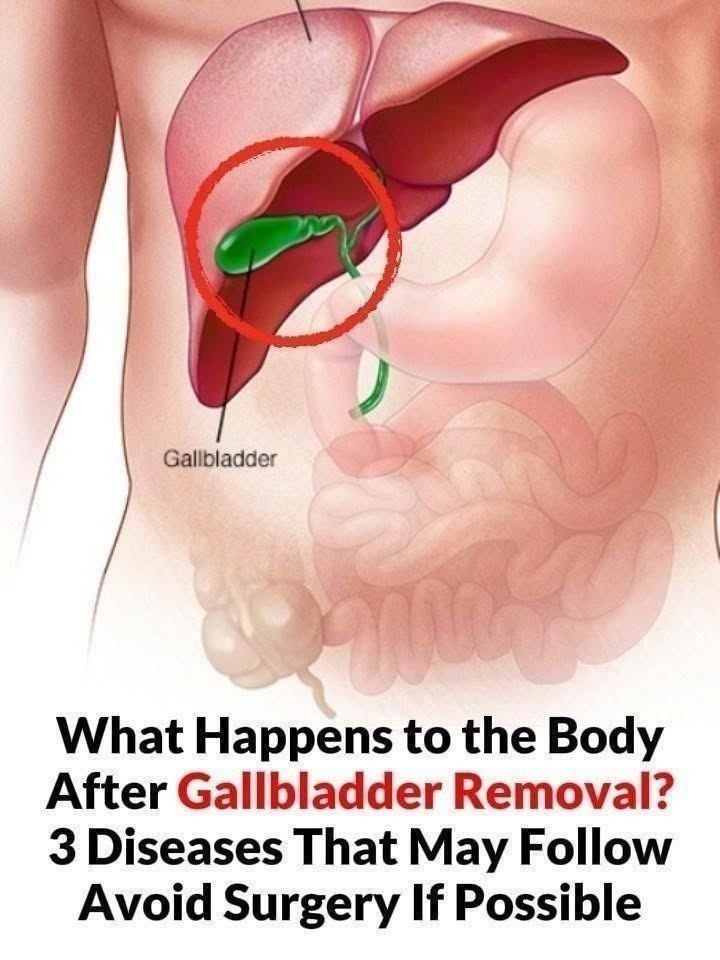
After Gallbladder Removal: 3 Things You Should Know — Is Avoiding Surgery Always Better?
Gallbladder removal (cholecystectomy) is a common procedure that helps many people with painful gallstones and gallbladder problems. While some people experience digestive changes afterward, avoiding surgery is not always the safest choice when complications are present.
Possible changes after gallbladder removal include:
- 🟡 Digestive changes
Without a gallbladder storing and releasing bile, some people notice bloating, gas, or changes in bowel habits—especially after eating fatty foods. - 🚽 Bile-related diarrhea
A small number of people may develop ongoing loose stools because bile flows continuously into the intestine. Treatment options are available. - 🍽️ Difficulty tolerating high-fat meals
Some people find that very fatty or heavy meals cause discomfort and need to adjust their eating habits.
When surgery may be recommended:
✅ Repeated gallstone attacks
✅ Gallbladder inflammation or infection
✅ Blocked bile ducts
✅ Serious complications from gallstones
Supporting gallbladder health:
🥗 Eat a balanced diet with enough fiber
⚖️ Avoid rapid weight loss
🏃 Stay physically active
🍟 Limit excessive high-fat processed foods
Gallbladder removal is not something to avoid at all costs—it is a medical decision based on symptoms, risks, and individual health. Discuss your options with a qualified healthcare professional.
