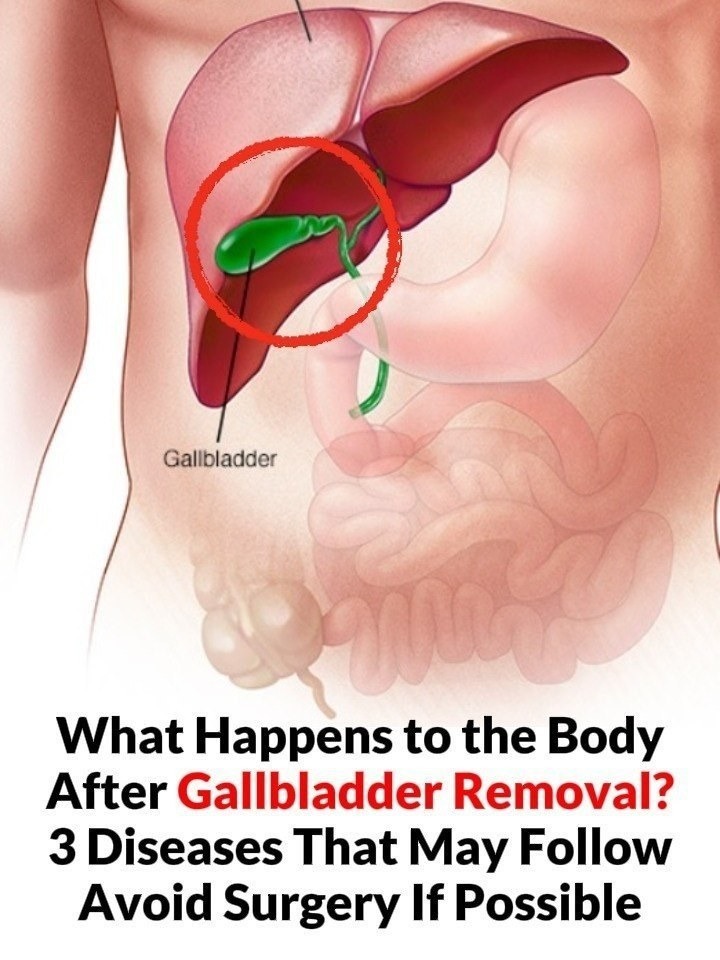
That headline is overstated and a bit misleading. Gallbladder removal (called Cholecystectomy) is actually a common and generally safe procedure—and for many people, it’s the right and necessary treatment.
But it’s also true that removing the gallbladder can lead to some after-effects in certain people. The key is balance, not fear.
🧠 First: should you “avoid the surgery”?
Not blindly. If you have:
- Painful Gallstones
- Gallbladder inflammation
- Blocked bile ducts
…then delaying surgery can actually be dangerous (infection, pancreatitis, complications).
Doctors usually recommend surgery only when benefits outweigh risks.
⚠️ 3 real conditions that can happen afterward
1. Digestive changes (very common)
Without a gallbladder, bile flows continuously instead of being stored.
This can lead to:
- Bloating
- Loose stools
- Trouble digesting fatty meals
In some cases, people develop Postcholecystectomy syndrome, which includes ongoing digestive discomfort.
2. Bile reflux
Instead of acid, bile can flow upward into the stomach.
This may cause:
- Burning sensation
- Nausea
- Irritation of the stomach lining
Less common than acid reflux, but it does happen.
3. Chronic diarrhea (in some people)
A subset of patients develop Bile acid diarrhea, where excess bile irritates the intestines.
It can be:
- Persistent
- Triggered by fatty foods
- Treatable (often with medication)
👍 What most headlines don’t tell you
- Many people live completely normal lives after surgery
- Side effects are often temporary or manageable
- Diet adjustments (especially reducing heavy fats early on) help a lot
🥗 Can you avoid surgery?
Sometimes—depending on your condition:
- Small, asymptomatic gallstones → may just be monitored
- Lifestyle changes (diet, weight management) can reduce symptoms
- But once symptoms become frequent or severe, surgery is often the most effective solution
🚫 The real risk of avoiding surgery
Ignoring serious gallbladder disease can lead to:
- Infection
- Blocked bile ducts
- Pancreatitis (which can be severe)
🧾 Bottom line
- Gallbladder removal isn’t something to fear—but it’s also not trivial
- The “3 conditions” are real, but usually manageable
- The claim that you should broadly “avoid the surgery” is too simplistic and sometimes unsafe
If you want, tell me your symptoms or situation—I can help you figure out whether surgery is typically recommended or if conservative options make sense first.
