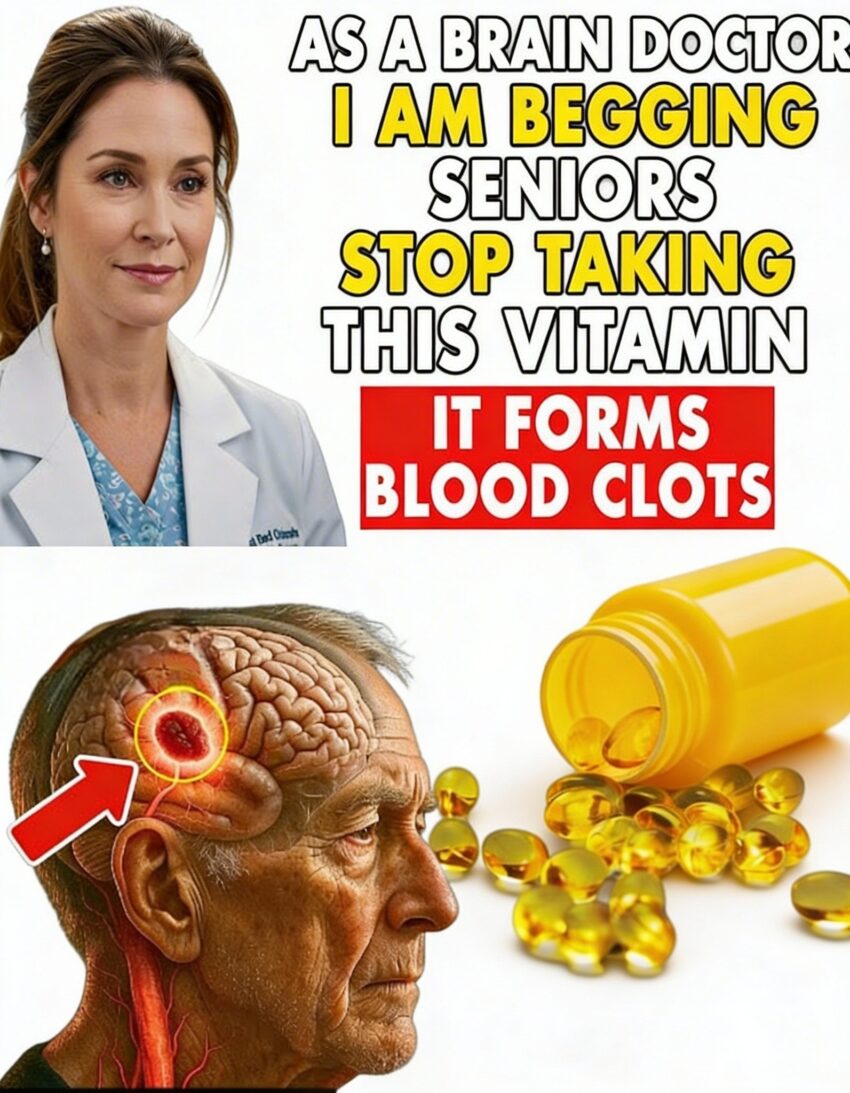
That sort of headline is classic clickbait — there’s no vitamin that suddenly “raises stroke risk overnight.” But there are situations where certain vitamin supplements at high doses or in specific conditions can influence stroke risk or blood clotting, especially in older adults. Here’s a clear, evidence‑based explanation from a brain health perspective:
🧠 First: Vitamins Themselves Don’t Cause Sudden Strokes
A true stroke — whether ischemic (blocked artery) or hemorrhagic (bleeding) — is the result of blood flow disruption in the brain. No vitamin instantly triggers that overnight.
However, some vitamins or supplements in high doses can affect factors related to stroke risk over time.
⚠️ Vitamins & Supplements That May Raise Risk in Certain Cases
✅ 1. High‑Dose Vitamin E
- At normal nutritional doses (15 mg/day), vitamin E is safe.
- Very high supplemental doses (≥400 IU/day) may increase bleeding risk by interfering with vitamin‑K–dependent clotting. This is especially notable in older adults or those on blood thinners.
- This is more a bleeding risk than a true stroke trigger, but it’s why doctors caution against megadoses.
💡 Important: Many trials showed no benefit — and possible risk — when vitamin E was taken in amounts far above what you’d get from food.
✅ 2. Vitamin K & Blood Thinners
- Vitamin K itself doesn’t raise stroke risk, but it interacts with anticoagulant medications like warfarin.
- If intake is inconsistent, your medication can become less effective at preventing clot‑related strokes.
✅ 3. Folate (B‑Vitamin) and B12 Balance
- Deficiencies (especially B12) may elevate homocysteine levels — a risk factor for stroke.
- Supplementation can help in deficient individuals, but unnecessary mega‑doses won’t provide extra protection.
❗ Situations Where Supplements Can Be Risky
⚙️ 1. Mixing High Doses With Medications
- Anticoagulants (blood thinners) + high‑dose vitamins can alter clotting
- Steroids or NSAIDs + certain supplements may increase bleeding risk
⚙️ 2. Excessive Antioxidants in Extreme Amounts
- Some high‑dose antioxidant supplements (vitamin E, beta‑carotene) in smokers or older adults were associated with harmful outcomes in studies.
🩺 What Doctors Actually Recommend
For stroke and brain health, evidence supports:
✔ A balanced diet rich in fruits, vegetables, whole grains, nuts, and fatty fish
✔ Maintaining healthy blood pressure and cholesterol
✔ Regular physical activity
✔ Treating diabetes and smoking cessation
✔ Monitoring nutrient levels (especially B12 in older adults)
Vitamin supplements can be helpful if you have a documented deficiency, but more is not always better.
🔍 Quick Reality Check
| Vitamin/Supplement | Typical Effect | Stroke Risk Connection |
|---|---|---|
| Vitamin E (high dose) | Antioxidant | Possible bleeding risk at very high doses |
| Vitamin K | Blood clotting | Affects warfarin effectiveness |
| B‑Vitamins (B6, B12, folate) | Homocysteine regulation | Can reduce risk if deficient |
| Vitamin D | Bone health | No direct stroke increase |
🧠 Bottom Line
- No vitamin causes strokes overnight.
- High doses of certain supplements — especially vitamin E — might increase bleeding risk in specific contexts (e.g., in people on anticoagulants or with clotting disorders).
- Always talk to your doctor before starting high‑dose vitamin supplements, especially if you’re older or taking medications.
If you want, tell me which vitamin you’re curious about (e.g., vitamin E, D, B12) and I’ll explain exactly what the evidence says about its risks and benefits for seniors’ brain health.
