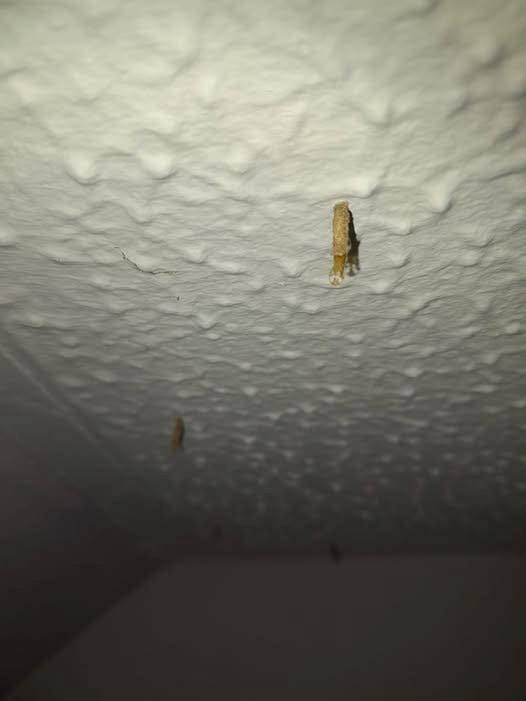
🦋 Case-Bearing Clothes Moth
The Tinea pellionella is a small household pest known for damaging natural fabrics. Unlike pantry moths, these target clothing, carpets, and upholstery.
🔍 How to Identify Them
Adult moths:
- Small (about ¼ inch long)
- Buff or grayish-brown
- Avoid light and hide in dark closets
Larvae (the damaging stage):
- Cream-colored caterpillars
- Carry a small silken “case” or tube around their bodies
- Feed on wool, silk, fur, feathers, and sometimes cotton blends
You may notice:
- Small irregular holes in clothing
- Silky webbing or tiny cases on fabric
- Shed skins or gritty debris
🧥 Why They Attack Clothes
Larvae feed on keratin, a protein found in:
- Wool
- Cashmere
- Silk
- Fur
- Leather
They’re especially attracted to:
- Unwashed clothes (sweat, skin oils)
- Dark, undisturbed storage areas
🧹 How to Get Rid of Them
1️⃣ Deep Clean
- Vacuum closets, baseboards, carpets thoroughly
- Discard vacuum bag immediately
2️⃣ Wash or Freeze Fabrics
- Wash infested items in hot water (if safe for fabric)
- Or freeze items for 72 hours to kill eggs and larvae
3️⃣ Dry Clean Delicate Items
4️⃣ Use Airtight Storage
- Store seasonal clothes in sealed plastic bins or garment bags
5️⃣ Monitor
- Use pheromone traps to monitor adult moth activity (they help track, not eliminate infestation)
🌿 Prevention Tips
✔ Keep closets clean and well-lit
✔ Wash clothes before storing
✔ Avoid storing dirty woolens
✔ Maintain low humidity
🧠 Bottom Line
Case-bearing clothes moths damage fabrics during their larval stage — not as flying adults. Early cleaning and proper storage are the best defenses.
If you’d like, tell me where you’re seeing them (closet, carpet, attic), and I can suggest a targeted removal plan.
