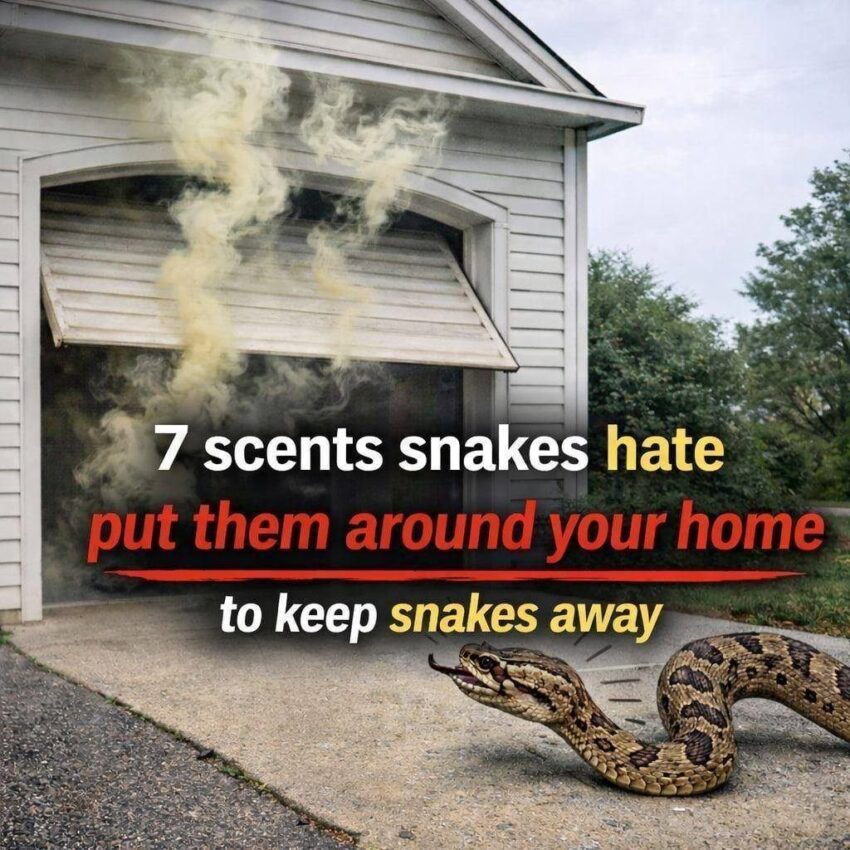
Snakes do have a highly developed sense of smell—but it’s not like a human “nose.” They mainly detect odors using their tongue and a special organ called the Jacobson’s organ, which helps them “taste” chemical traces in the air and ground. That’s why strong or irritating scents can sometimes discourage them from entering an area.
That said, there’s no scent that reliably “instantly repels” all snakes in every situation. Snake behavior varies by species, habitat, and food availability. Still, here are 7 smells commonly reported to deter snakes—with some practical context:
1. Ammonia
Strong ammonia fumes are irritating to snakes and may discourage them from entering enclosed or damp areas.
How it’s used: Cotton balls soaked in ammonia placed in containers near entry points (outdoors only, carefully sealed so pets/children can’t access).
2. Vinegar
The sharp acidity of vinegar can irritate snakes, especially near water sources where they may travel.
How it’s used: Sprayed around pools, drains, or perimeter edges (works more as a boundary deterrent than a repellent).
3. Cinnamon and Clove oils
Essential oils like cinnamon and clove are thought to overwhelm a snake’s sensory system.
How it’s used: Diluted sprays along garden borders or potential entry gaps.
4. Sulfur
Sulfur has a strong odor that many reptiles avoid.
How it’s used: Powdered sulfur sprinkled around garden perimeters (effective only when dry).
5. Garlic and onion
The pungent sulfur compounds in these plants may irritate snakes’ chemical sensors.
How it’s used: Crushed garlic/onion mixtures or sprays around outdoor edges.
6. Smoke
Like many animals, snakes tend to avoid areas with heavy smoke, which signals danger.
How it’s used: Not a practical long-term solution, but smoke from controlled fires can temporarily drive them away.
7. Mothballs (naphthalene)
These are sometimes used as snake deterrents due to their strong chemical odor.
Important caution: Mothballs are toxic to humans, pets, and wildlife, and their use outdoors for snakes is not recommended in many regions due to health risks and environmental harm.
A reality check (important)
Even though these smells may discourage snakes temporarily, they are not guaranteed or long-term solutions. Snakes usually enter areas because of food (like rodents) or shelter, not just scent attraction.
More effective prevention:
- Keep grass short and remove piles of debris/wood
- Seal holes and gaps in walls or foundations
- Control rodent populations
- Store food waste properly
- Remove standing water and dense ground cover
If you want, I can also show you safe, proven snake-proofing methods for homes in Pakistan’s climate, which tend to work much better than scent-based repellents.
