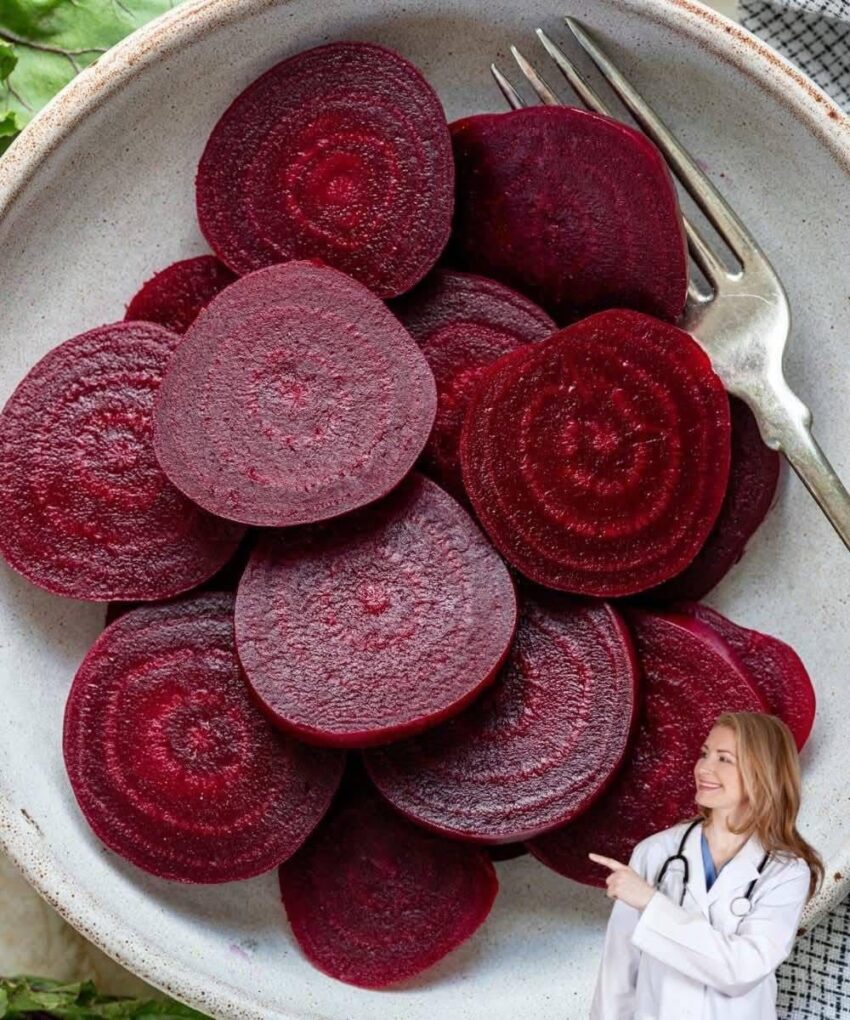
Here’s the accurate, evidence-based information about eating beets. Headlines like “Doctors reveal that eating beets causes ___” are usually clickbait, because beets are generally very healthy, though they do have a few effects to be aware of.
🍠 Health Effects of Eating Beets
✅ Positive Effects
- Blood pressure support
- Beets are high in nitrates, which can relax blood vessels and help lower blood pressure.
- Improved exercise performance
- Nitrates can increase oxygen efficiency, making workouts easier.
- Anti-inflammatory & antioxidant properties
- Rich in betalains which may reduce inflammation and oxidative stress.
- Digestive health
- High in fiber, supporting gut function and regularity.
- Liver support
- Betaines in beets may help the liver process toxins efficiently.
⚠️ Possible Side Effects
- Beeturia (red urine or stools)
- Harmless in most people, occurs in ~10–14% of adults after eating beets.
- Kidney stone risk
- Beets are high in oxalates, which can contribute to kidney stones in susceptible people.
- Digestive sensitivity
- May cause gas or mild bloating if eaten in large amounts.
💡 Bottom Line
- Eating beets is safe and beneficial for most people.
- They don’t “cause” serious problems unless consumed in extremely large amounts by someone prone to kidney stones.
- Occasional red urine or stools is normal and harmless.
If you want, I can make a list of 5 best ways to eat beets that maximize their health benefits without any side effects.
