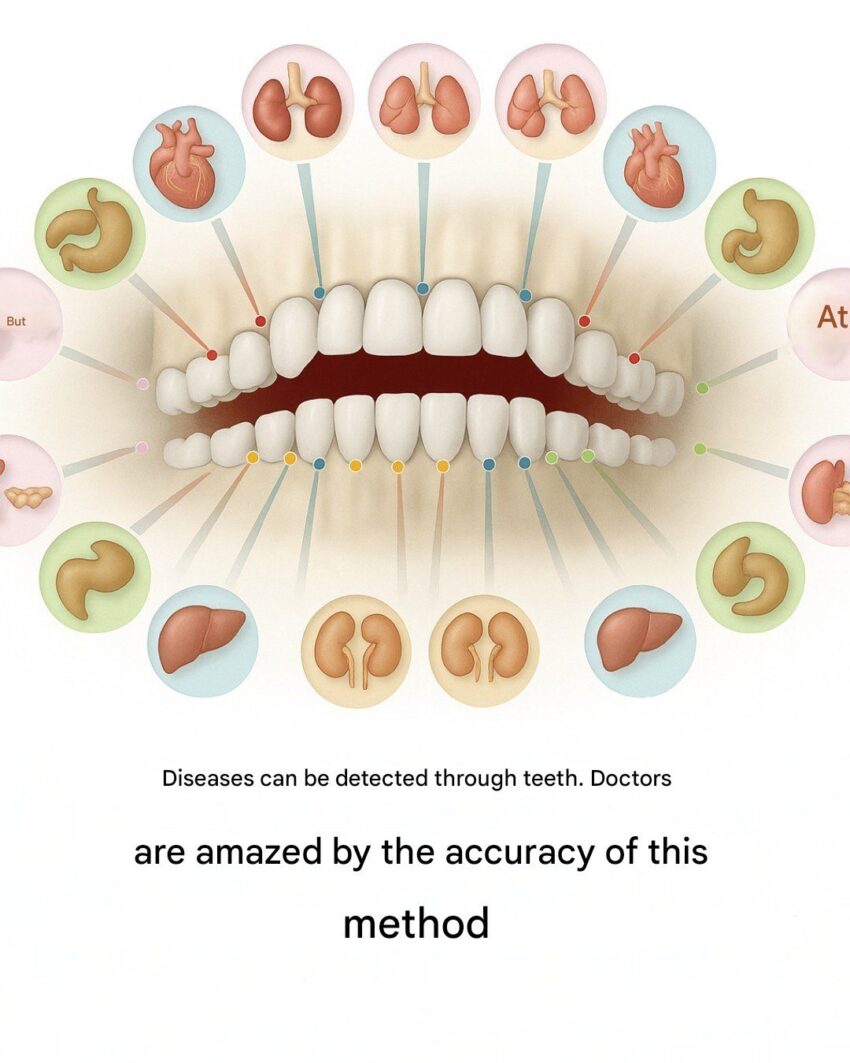
You’ll often hear the claim that “each tooth is connected to a specific organ” and that dental pain predicts future disease. Let’s separate myth from medicine.
🦷 Is Each Tooth Linked to an Organ?
There is no scientific evidence that each individual tooth maps directly to a specific organ (like a chart that says “this molar = your liver”).
Those charts usually come from Traditional Chinese Medicine meridian theory, not modern anatomy.
In conventional medicine:
- Teeth are connected to nerves, blood vessels, and surrounding tissues
- They are not directly wired to specific internal organs
✅ But Here’s What Is True
Oral health is strongly connected to overall health.
1️⃣ Gum Disease & Heart Disease ❤️
Chronic gum inflammation (periodontitis) is associated with increased risk of:
- Heart disease
- Stroke
- Atherosclerosis
Inflammation and bacteria can enter the bloodstream.
2️⃣ Diabetes 🍬
- Gum disease can make blood sugar harder to control.
- Poorly controlled diabetes increases infection risk in the gums.
It’s a two-way relationship.
3️⃣ Kidney & Immune Conditions
Chronic infections in the mouth may stress the immune system and can be more serious in people with kidney disease or weakened immunity.
4️⃣ Sinus Issues 😷
Upper tooth pain can sometimes be caused by sinus infections, not the tooth itself — because the roots sit near the sinus cavity.
⚠️ When Dental Pain Does Signal Bigger Trouble
See a professional if you have:
- Persistent tooth pain
- Swelling in face or jaw
- Fever
- Bad taste or pus
- Pain spreading to ear, neck, or head
A dental infection can become serious if untreated.
🧠 The Bottom Line
There’s no proven one-to-one “tooth-organ map.”
But your mouth is a window into your overall health.
Healthy gums and teeth reduce inflammation and lower risk for systemic disease.
If you’d like, I can show you the early warning signs in your mouth that actually do predict health problems — the ones doctors and dentists really pay attention to.
