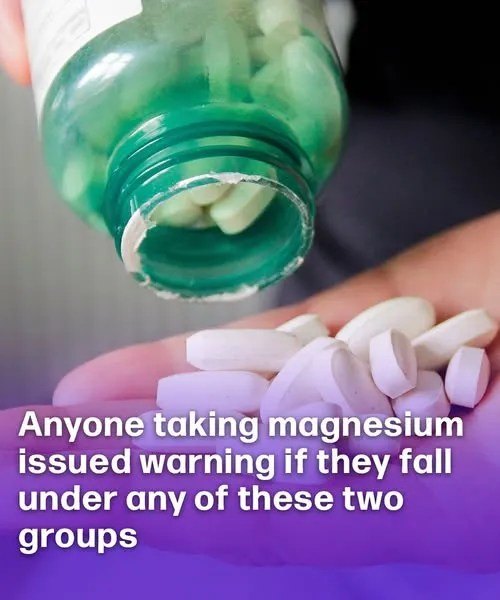
Health experts are increasingly warning that magnesium supplements aren’t harmless for everyone — and they’re especially cautious about use in two high‑risk groups. Recent reporting highlights these concerns and urges careful evaluation before taking magnesium pills. (Tyla)
⚠️ Why Experts Are Issuing Warnings
Magnesium is essential for muscle, nerve, heart, and bone health, and many people take supplements for sleep, digestion, or relaxation. But supplements can cause side effects like diarrhea, nausea, and abdominal discomfort, especially at higher doses. (Healthline)
More importantly, magnesium that isn’t properly cleared from the body can build up, leading to magnesium toxicity (hypermagnesemia) — a serious condition with symptoms ranging from muscle weakness and low blood pressure to cardiac problems. (Bolt Pharmacy)
🧑⚕️ Two Groups Especially at Risk
1. People with Kidney Problems
If your kidneys aren’t working well — such as in chronic kidney disease or impaired renal function — your body can’t easily remove excess magnesium.
- This means magnesium from supplements can accumulate to dangerous levels.
- Symptoms of too much magnesium include weakness, confusion, breathing trouble, and irregular heart rhythm. (Bolt Pharmacy)
👉 Why this matters: Many people don’t realize that even moderate supplement doses can build up if kidneys can’t filter effectively.
2. Older Adults and Those on Certain Medications
As people age, kidney function can naturally decline, increasing the risk of magnesium buildup even without diagnosed kidney disease. Also, some medications interact with magnesium, including:
- Certain antibiotics
- Diuretics (“water pills”)
- Heart rhythm medications
which can affect how magnesium is absorbed or eliminated. (WellCalm)
👉 Why this matters: Older adults are more likely to take multiple prescriptions, raising the risk of interactions and adverse effects.
🩺 What Experts Recommend
✅ Don’t start magnesium supplements without advice if you have:
- Kidney disease or reduced kidney function
- Heart rhythm issues
- Multiple prescriptions
💡 They also recommend:
- Getting magnesium from foods first (leafy greens, nuts, seeds, legumes)
- Keeping supplemental magnesium below recommended limits (~350 mg/day unless medically advised)
- Talking with a healthcare professional before beginning any new supplement routine (Healthline)
📌 Bottom Line
Magnesium supplements can be helpful — but not everyone should take them routinely. For people with kidney problems and many older adults (especially those on other medications), the risks can outweigh the benefits. (Bolt Pharmacy)
If you want, I can walk you through safe, food‑based ways to boost magnesium without supplements. Just let me know!
