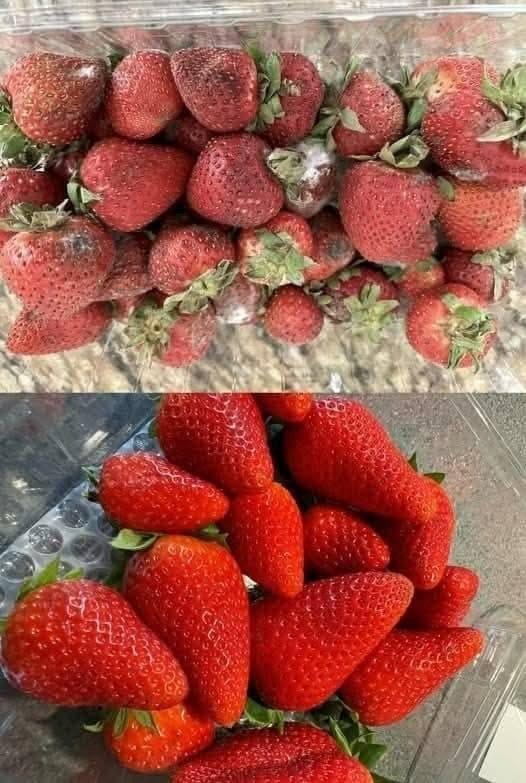
1. Don’t Wash Until Ready to Eat
-
Strawberries are very porous and absorb moisture easily.
-
Tip: Only wash strawberries right before eating or using them.
2. Inspect and Remove Bad Berries
-
Mold spreads quickly.
-
Tip: Go through your strawberries and remove any that are bruised, soft, or moldy before storing.
3. Store in the Fridge Properly
-
Keep strawberries in the coldest part of the fridge, ideally 32–36°F (0–2°C).
-
Tip: Line a container with paper towels to absorb excess moisture and place the berries in a single layer if possible.
4. Use a Breathable Container
-
Avoid tightly sealed plastic bags; strawberries need airflow to stay fresh.
-
Tip: Use the original container (often ventilated) or a shallow container with a loose lid.
5. Optional: Vinegar Wash for Longer Life
-
A mild vinegar wash kills mold spores and bacteria.
-
How: Mix 1 part white vinegar with 3 parts water, briefly soak strawberries, rinse under cold water, and dry thoroughly.
-
Result: Can extend fridge life by a few days.
6. Freeze for Long-Term Storage
-
If you can’t eat them in a few days, freezing is best:
-
Wash, hull, and dry strawberries.
-
Spread in a single layer on a baking sheet and freeze until solid.
-
Transfer to an airtight freezer bag.
-
-
Tip: Frozen strawberries are perfect for smoothies, desserts, or sauces.
If you want, I can make a quick chart showing fridge vs freezer storage times for strawberries and other berries—it’s super handy. Do you want me to make that?
