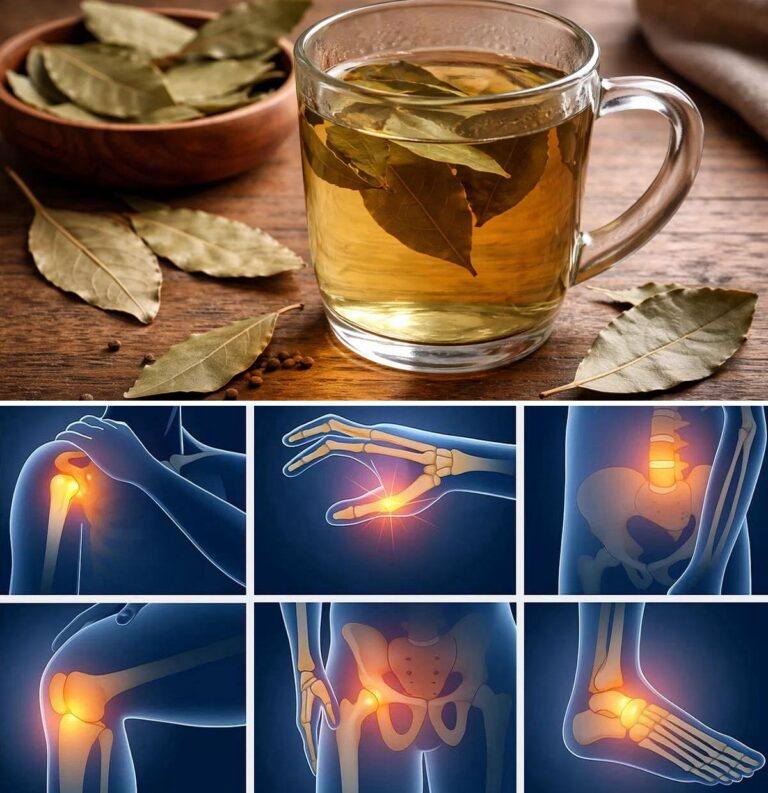
Laurel tea (made from bay leaves of Laurus nobilis) is a traditional herbal remedy sometimes used for joint, muscle, and rheumatic discomfort.
Here’s what it can — and can’t — realistically do.
🌿 Why People Use Laurel Tea for Pain
Bay leaves contain:
- Eugenol (mild anti-inflammatory properties)
- Cineole
- Antioxidant compounds
These may help:
- Mild muscle soreness
- Minor joint stiffness
- General inflammation support
⚠️ It is not a cure for arthritis or rheumatic diseases. It may offer mild symptom relief only.
☕ How to Prepare Laurel Tea
Ingredients
- 3–5 dried bay leaves
- 1½–2 cups (350–500 ml) water
Instructions
- Bring water to a boil.
- Add bay leaves.
- Simmer for 5–10 minutes.
- Turn off heat and let steep 10 minutes.
- Strain before drinking.
How to Use
- Drink 1 cup once daily, preferably after meals.
- Use for up to 5–7 days, then take a break.
Do not exceed 1–2 cups per day.
🧴 Alternative: Laurel Oil for External Use
For muscle or joint pain, topical use may be more effective.
You can:
- Crush dried bay leaves
- Soak them in olive oil for 2–3 weeks
- Strain and massage into sore areas
Topical application often provides better localized relief than tea.
🚨 Safety Precautions
Avoid or consult a doctor if you:
- Are pregnant or breastfeeding
- Have diabetes (bay leaf may affect blood sugar)
- Take blood thinners
- Have upcoming surgery
Stop if you experience:
- Stomach irritation
- Allergic reaction
- Dizziness
🩺 Important Note on Rheumatic Pain
If you have:
- Persistent swelling
- Severe joint pain
- Morning stiffness lasting >1 hour
- Diagnosed rheumatoid arthritis or gout
You should see a healthcare provider. Herbal teas alone won’t manage inflammatory joint diseases effectively.
If you’d like, tell me:
- Is your pain muscular, arthritic, or inflammatory?
- How long have you had it?
I can suggest a safer, more targeted approach for your specific situation.
