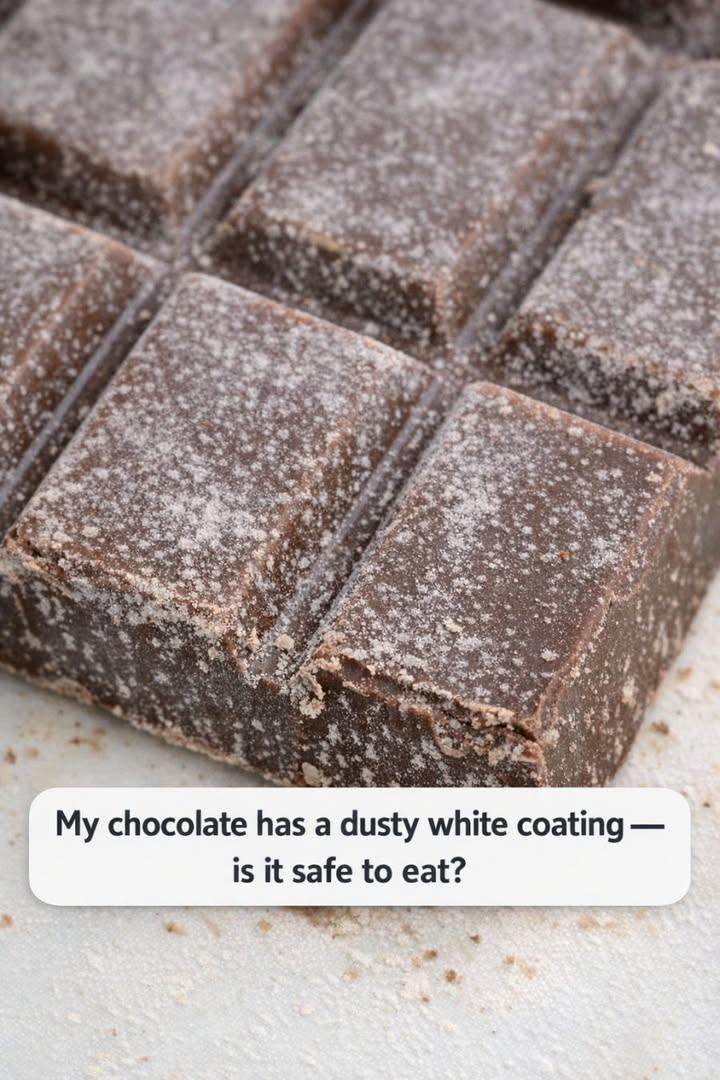
Yes — in most cases, chocolate with a dusty white coating is safe to eat.
What you’re seeing is usually something called chocolate bloom, not mold.
🍫 What Is Chocolate Bloom?
There are two types:
1️⃣ Fat Bloom (Most Common)
- Caused by temperature changes.
- Cocoa butter rises to the surface and solidifies.
- Looks like white streaks or patches.
- Texture may feel slightly softer or crumbly.
2️⃣ Sugar Bloom
- Caused by moisture.
- Sugar crystals form on the surface.
- Looks powdery or grainy.
Both are harmless.
🧪 How To Tell If It’s Still Safe
Safe to eat if:
- Smells normal (rich cocoa smell)
- No fuzzy growth
- No sour or strange odor
- No signs of moisture damage with mold
Throw it away if:
- It smells bad
- Has fuzzy or green/black growth
- Tastes very off
True mold on chocolate is rare because chocolate is low in water.
🍰 Can You Still Use It?
Yes! Even if the texture isn’t perfect, bloomed chocolate works great for:
- Baking
- Melting into ganache
- Hot chocolate
- Brownies or cookies
💡 How To Prevent Bloom
- Store chocolate in a cool, dry place (60–70°F / 15–21°C)
- Avoid refrigeration unless necessary
- Keep away from humidity
Bottom Line
That white coating is almost always cosmetic and safe — it just affects appearance and texture, not safety.
If you want, tell me:
- Is it solid chocolate or filled?
- Was it stored in the fridge?
I can help you identify which type of bloom it is.
