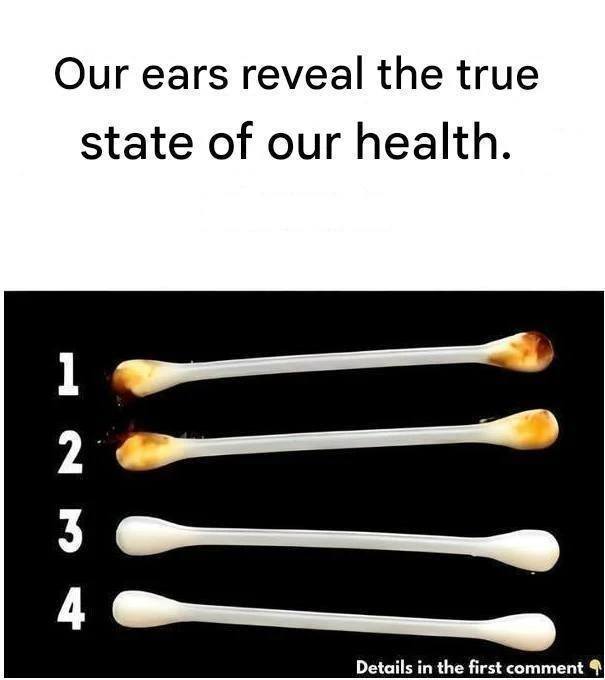
Your ears can reflect certain aspects of your health — but not in the mystical “ear map reveals everything” way you sometimes see online.
Here’s what ears can genuinely tell us:
👂 1️⃣ Earlobe Crease & Heart Risk (Possible Link)
A diagonal crease in the earlobe (sometimes called Frank’s sign) has been studied for a possible association with cardiovascular disease.
Important:
- It is not a diagnosis.
- Many people with creases are perfectly healthy.
- It may be one small risk marker, not proof of heart disease.
🎧 2️⃣ Hearing Loss & Brain Health
Gradual hearing loss has been associated with:
- Cognitive decline
- Increased dementia risk
- Social isolation (which affects brain health)
Untreated hearing loss may increase mental strain over time.
🩺 3️⃣ Ear Color & Circulation
- Pale ears → possible anemia
- Bluish tint → oxygen circulation issues
- Red, hot ears → fever or inflammation
These are general signs, not definitive diagnoses.
🦠 4️⃣ Chronic Ear Infections
Frequent infections can signal:
- Allergies
- Immune system issues
- Eustachian tube dysfunction
In adults, persistent ear infections should be evaluated.
👶 5️⃣ Ear Shape & Genetic Conditions
In newborns, unusual ear shape can sometimes be linked to certain genetic syndromes — which is why pediatricians examine ears carefully.
⚠️ What’s NOT Scientifically Proven
- That every ear zone corresponds to a specific organ
- That reading ear ridges predicts future disease
- That ear color alone diagnoses internal problems
Those claims come mostly from alternative medicine traditions like auriculotherapy.
✅ The Real Takeaway
Ears can give clues, but they don’t provide a complete health diagnosis.
If you notice:
- Sudden hearing loss
- Persistent pain
- Drainage
- Ringing that won’t stop
See a healthcare professional.
If you’d like, I can show you 3 ear signs doctors actually take seriously versus the ones that are mostly internet myths.
