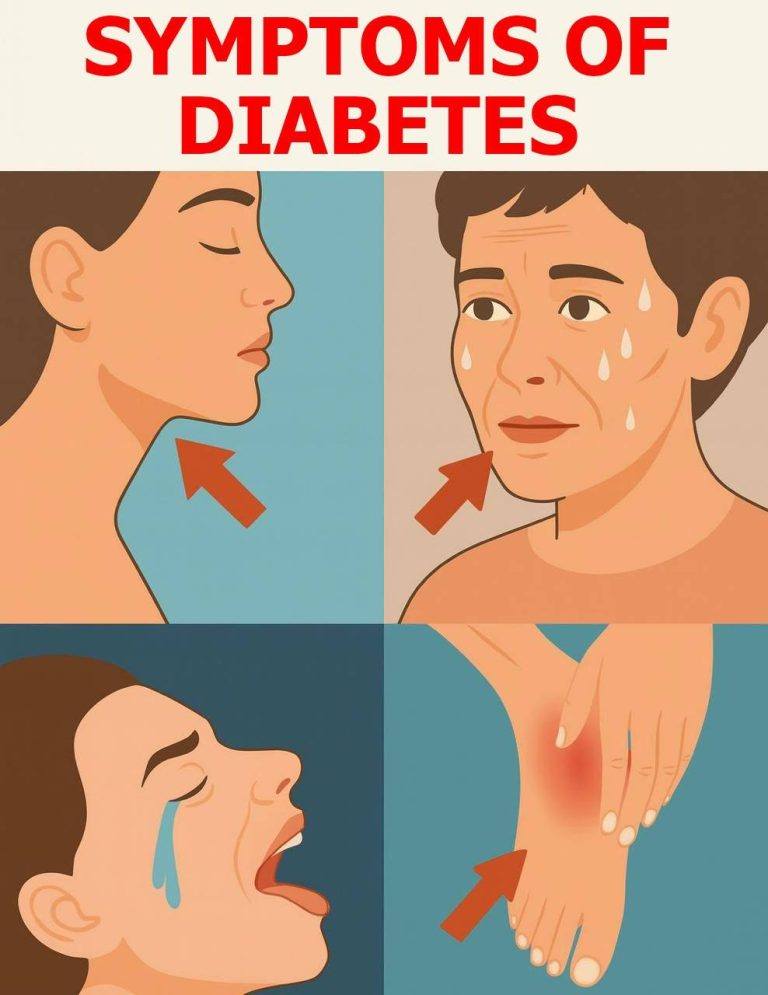
High blood sugar (hyperglycemia) often develops quietly, especially in early stages of Type 2 Diabetes. Recognizing the warning signs—and knowing who is most at risk—can help prevent serious complications.
⚠️ Common Signs of High Blood Sugar
These symptoms may appear gradually:
🚰 Frequent urination & excessive thirst
- You may feel thirsty all the time and need to urinate often, even at night.
🍽️ Increased hunger (even after eating)
- Cells aren’t getting enough glucose, so your body keeps signaling hunger.
😴 Fatigue and weakness
- Without proper glucose use, energy levels drop.
👁️ Blurred vision
- High sugar levels can affect the lenses of your eyes.
🩹 Slow healing wounds
- Cuts, infections, or bruises take longer to heal.
⚖️ Unexplained weight loss
- More common in advanced or untreated cases.
🦶 Tingling or numbness
- Especially in hands and feet—linked to nerve damage over time.
🚨 People Most at Risk of Developing Diabetes
1. Individuals with excess weight
- Especially belly fat (visceral fat), which increases insulin resistance.
2. Sedentary lifestyle
- Lack of physical activity reduces the body’s ability to regulate glucose.
3. Family history
- If parents or siblings have Type 2 Diabetes, your risk is higher.
4. Age 45+
- Risk increases with age, particularly after 60.
5. People with high blood pressure or cholesterol
- These conditions often cluster with diabetes.
6. Women with history of gestational diabetes
- Raises long-term risk significantly.
7. Poor dietary habits
- High intake of sugar, refined carbs, and processed foods.
8. Certain ethnic backgrounds
- South Asians (including people in Pakistan), Middle Eastern, and African populations have higher risk.
🧠 Why It Matters
Untreated high blood sugar can lead to:
- Heart disease
- Kidney damage
- Vision loss
- Nerve damage
✅ When to Take Action
You should consider testing your blood sugar if:
- You have 2+ symptoms
- You fall into a high-risk group
- You’re over 40 and haven’t been screened recently
🛡️ Simple Prevention Tips
- Walk at least 30 minutes daily
- Eat more whole foods (vegetables, lentils, whole grains)
- Reduce sugary drinks and refined carbs
- Maintain a healthy weight
- Get regular blood sugar checks
If you want, I can help you check your personal risk level or create a diet plan suited to Pakistani meals that helps prevent high blood sugar.
