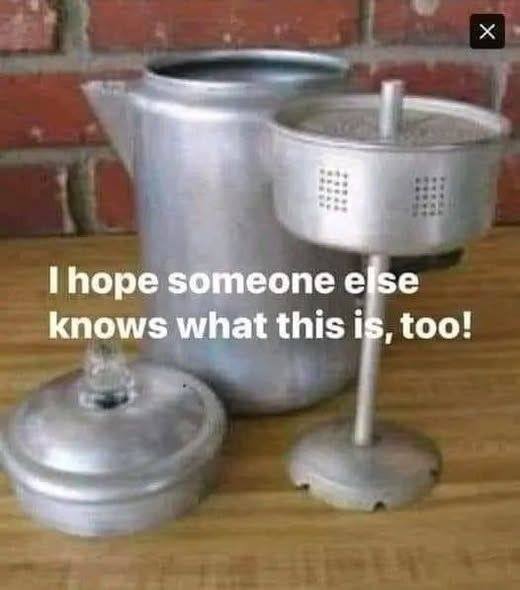
You’ve stumbled on a classic coffee percolator—a true vintage kitchen workhorse ☕
They look mysterious if you’ve never used one, but once you know how it works, it’s actually pretty brilliant.
What It Is
This is a stovetop coffee percolator, commonly used from the 1930s through the 1970s, long before drip machines and pod coffee.
It brews coffee by cycling boiling water up through coffee grounds over and over.
The Main Parts (Why It Looks So Weird)
Inside, you’ll find:
- Bottom chamber – holds water
- Vertical metal tube (the “stem”) – carries hot water upward
- Perforated basket – holds coffee grounds
- Glass or plastic knob on top – lets you watch the coffee “perk”
When water boils, it travels up the tube, spills over the grounds, and drips back down—repeating the cycle.
How It Works (The Ritual Part)
- Fill the bottom with water
- Add coarse coffee grounds to the basket
- Place it on the stove
- Watch the top knob start to bubble and darken
- Once it perks steadily (not violently), lower the heat
- Brew 5–10 minutes, depending on strength
That rhythmic perk-perk-perk sound? That’s the magic.
Why People Loved (and Still Love) It
- Makes strong, bold coffee
- No paper filters needed
- Built to last decades
- Feels hands-on and intentional—coffee as a ritual, not a button press
Why It Fell Out of Fashion
- Easy to overbrew (can taste bitter if left too long)
- Requires attention
- Drip machines became “set it and forget it”
But many coffee lovers are rediscovering them for their character and flavor.
Is It Safe to Use?
Usually yes, but:
- Check for cracks, rust, or loose parts
- Avoid very old aluminum ones if badly pitted
- Replace cracked plastic or glass knobs if needed
Bottom Line
You didn’t find junk—you found a piece of coffee history.
Your grandmother didn’t just make coffee… she performed it.
If you want, tell me:
- What material it’s made of (aluminum, stainless, enamel)
- Whether it’s stovetop or electric
I can tell you how old it likely is and how to brew with it perfectly.
