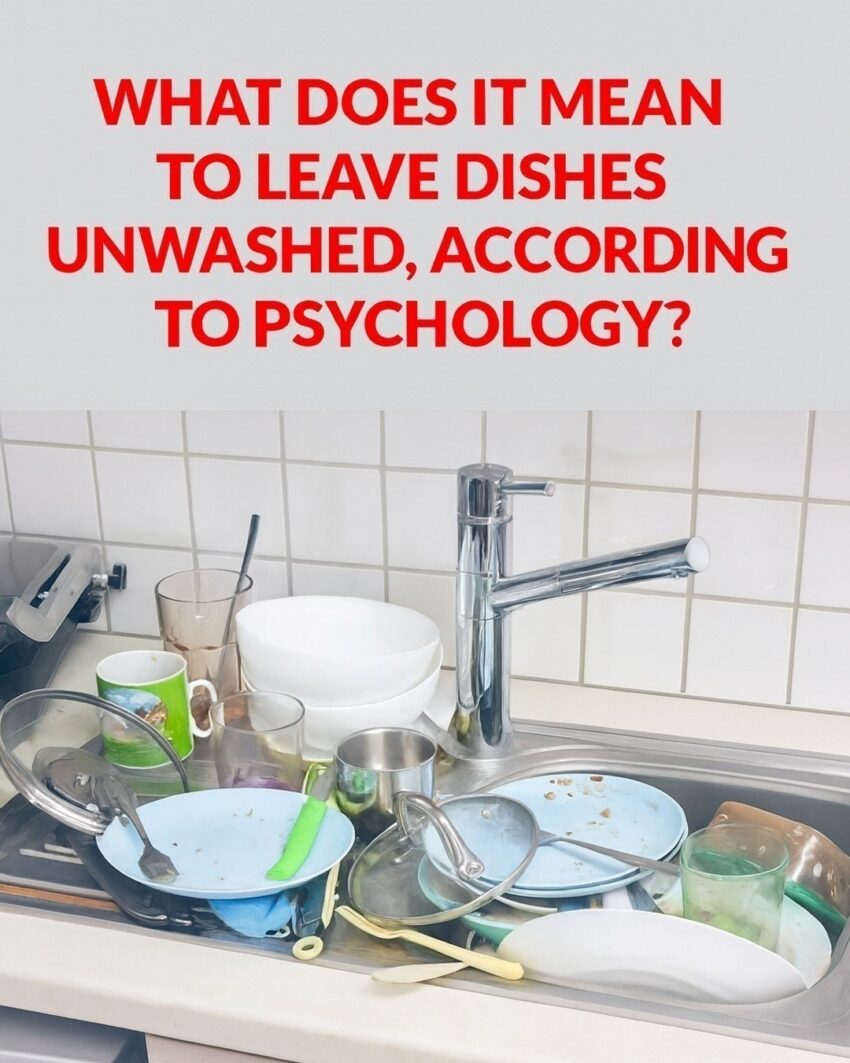
Leaving dirty dishes out is a small behavior that can carry surprisingly meaningful psychological signals—not as a diagnosis, but as a window into stress levels, habits, and mental load. Understanding why dishes pile up also explains why it’s helpful not to let them.
The Psychological Meaning of Leaving Dirty Dishes
1. Mental Overload, Not Laziness
When dishes pile up, it often reflects cognitive overload. The brain prioritizes urgent or emotionally demanding tasks (work, caregiving, deadlines), pushing low-stakes chores aside.
- The dishes become a victim of depleted mental energy, not a lack of responsibility.
2. Decision Fatigue
Even small actions require decisions: rinse or soak, wash now or later. When someone is mentally exhausted, the brain avoids additional choices.
- The sink becomes a visual marker of how many decisions a person has already made that day.
3. Avoidance & Emotional Weight
Dirty dishes can symbolize unfinished business. For some people, seeing them triggers:
- Guilt
- Shame
- A sense of failure
Which ironically makes avoidance more likely, creating a feedback loop.
4. Burnout or Low Mood
Persistent buildup—especially when it’s out of character—can signal:
- Burnout
- Mild depressive symptoms
- Emotional numbness
Daily maintenance tasks often drop first when emotional reserves are low.
5. Different Standards, Not Moral Failure
Psychologically, people have different thresholds for visual disorder. What feels intolerable to one person may barely register to another.
- This is personality-based, not a character flaw.
Why Dirty Dishes Shouldn’t Pile Up (Psychologically)
1. Visual Clutter Increases Stress
Studies show visual mess raises cortisol levels. A sink full of dishes:
- Keeps the brain in a low-grade stress state
- Signals “unfinished work” repeatedly throughout the day
2. They Drain Future Energy
The longer dishes sit, the bigger the task feels. This:
- Increases task aversion
- Makes starting harder later
- Consumes more mental energy than the task itself would have
3. Small Wins Improve Mood
Doing dishes provides:
- Immediate completion
- Visible progress
- A sense of control
These are powerful mood stabilizers, especially during stressful periods.
4. They Affect Relationships
In shared spaces, piled-up dishes often become symbols of imbalance or resentment, even when the real issue is stress or miscommunication.
A Healthier Way to Think About Dishes
Instead of framing dishes as a moral obligation:
- See them as emotional maintenance, not cleanliness perfection
- Even rinsing or stacking neatly counts as progress
- “Good enough” is psychologically better than “perfect later”
A Helpful Reframe
“I’m not bad for leaving dishes. But doing them now helps future me feel calmer.”
That shift—from guilt to self-support—is often what makes the habit stick.
If you’d like, I can also share psychologist-backed strategies to make dishes feel easier (2-minute rules, habit stacking, or low-energy systems)
