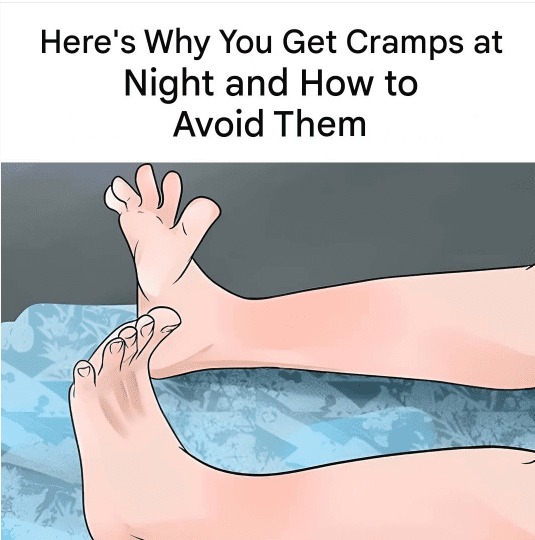
Night cramps (often called “charley horses”) are common—and the cause isn’t just one simple thing. It’s usually a mix of factors affecting your muscles and nerves.
🌙 Why cramps happen at night
1. Muscle fatigue or overuse
If you’ve walked a lot, exercised, or stood for long hours, your muscles can tighten up later while resting.
2. Dehydration
Not drinking enough water can disturb the balance of fluids in your muscles, making cramps more likely.
3. Low minerals (electrolytes)
Imbalances in:
- Potassium
- Magnesium
- Calcium
can affect muscle contraction and relaxation.
👉 Low calcium over time is also linked to issues like osteoporosis, though cramps are usually more about muscle function than bone health.
4. Poor circulation or nerve issues
Reduced blood flow or nerve irritation (like in peripheral neuropathy) can trigger sudden cramps.
5. Long periods of inactivity
Sitting or lying in one position for too long (especially with feet pointed downward) can cause muscles to tighten.
6. Certain conditions or medications
- Pregnancy
- Diabetes
- Some blood pressure medicines
⚡ What a cramp actually is
A cramp is a sudden, involuntary muscle contraction—basically your muscle “locking up” for a few seconds to minutes.
🛠️ How to prevent night cramps
- Stay hydrated throughout the day
- Stretch your calves before bed
- Walk or move regularly if you sit a lot
- Eat foods rich in potassium & magnesium (bananas, yogurt, nuts)
- Avoid sleeping with toes pointed downward
🚨 When to take it seriously
See a doctor if:
- Cramps happen very frequently
- They are severe or worsening
- You also feel numbness or weakness
✅ Bottom line
Night cramps usually aren’t dangerous—they’re your body reacting to fatigue, hydration, or mineral balance. Small daily habits can make a big difference.
If you want, I can show you a 30-second stretch that instantly relieves a cramp when it happens—it works almost every time.
