Here’s a clear, practical, and accurate version of your topic:
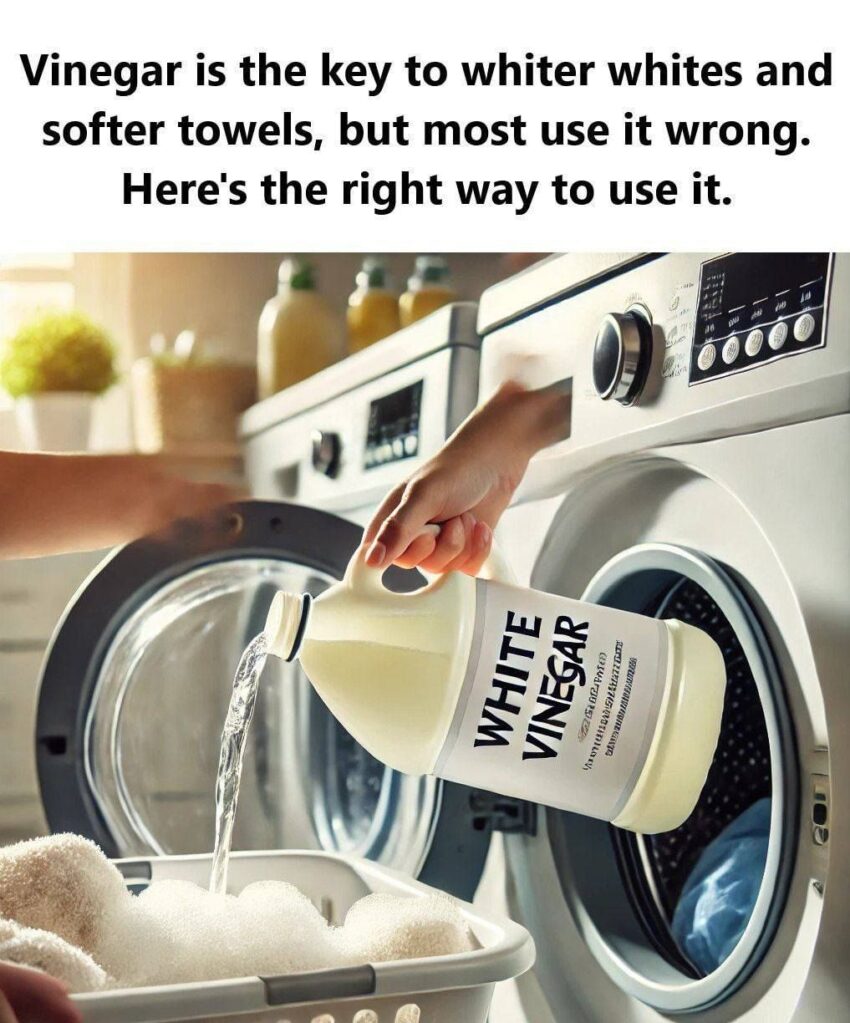
Vinegar: The Key to Whiter Whites and Softer Towels (But Most People Use It Wrong). Here’s the Right Way.
White vinegar is one of the most effective, inexpensive laundry boosters — but only if you use it correctly.
🧺 Why Vinegar Works
White distilled vinegar helps:
- Remove detergent residue
- Break down mineral buildup (hard water)
- Eliminate musty odors
- Soften fabric naturally
- Brighten whites (by removing dulling residue)
It works because it’s mildly acidic, which dissolves soap buildup that makes clothes stiff and dingy.
❌ How Most People Use It Wrong
- Pouring it directly onto clothes
- Mixing it with bleach (dangerous — can create toxic chlorine gas)
- Using too much
- Adding it to the detergent compartment
- Using it every single load unnecessarily
✅ The Right Way to Use Vinegar in Laundry
For Softer Towels
- Add ½ to 1 cup of white distilled vinegar
- Pour it into the fabric softener dispenser, not directly on clothes
- Use during the rinse cycle
This removes residue that makes towels stiff and scratchy.
For Whiter Whites
- Add 1 cup of vinegar to the rinse cycle
- Wash whites as usual with detergent
- For extra brightening, soak whites in hot water + 1 cup vinegar for 1 hour before washing
Note: Vinegar removes dullness — it does not bleach fabric.
For Odor Removal
- Add 1 cup to the rinse cycle
- Especially helpful for gym clothes, mildew smell, or musty towels
⚠️ Important Safety Tips
- Never mix vinegar with bleach
- Don’t use on natural stone surfaces (if pre-treating stains)
- Avoid overuse — occasional use is best
- Check care labels for delicate fabrics
💡 Bonus Tip for Towels
If towels are very stiff:
- Wash once with hot water + 1 cup vinegar (no detergent)
- Wash again with ½ cup baking soda (no detergent)
This strips heavy buildup and restores softness.
If you’d like, I can also share 3 laundry mistakes that secretly ruin towels and make whites look gray.
