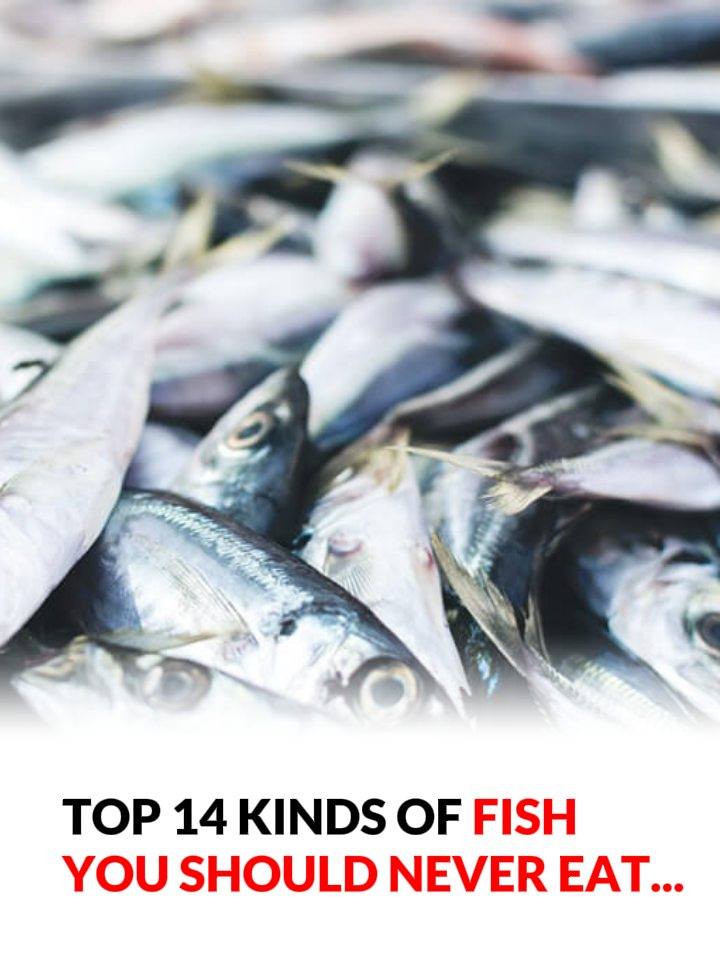
That headline is alarmist, so let’s slow it down and look at the real, science-based guidance. No panic—just clear facts. 🐟
⚠️ Fish You Should Limit or Avoid (Not “Never Eat” for Most People)
The main concern is mercury, PCBs, and other contaminants that accumulate in large, long-lived predatory fish.
🚫 Highest Mercury Fish (Avoid or Eat Very Rarely)
Especially important for pregnant women, children, and frequent fish eaters:
- Shark
- Swordfish
- King mackerel
- Tilefish (from the Gulf of Mexico)
- Bigeye tuna (often in sushi)
Why?
- Mercury builds up over time
- Can affect the brain, nervous system, and fetal development
⚠️ Fish to Limit (Occasional, Small Portions)
- Albacore (white) tuna
- Grouper
- Chilean sea bass
- Marlin
Limit to once or twice a month, depending on body size and health status.
✅ Fish That Are Safe & Highly Recommended
Low in mercury and high in omega-3s:
- Salmon (wild or farmed)
- Sardines
- Anchovies
- Trout
- Herring
- Tilapia
- Cod
- Shrimp
These support:
- Heart health
- Brain function
- Reduced inflammation
🧠 What Science Actually Says
- Fish is one of the healthiest proteins you can eat
- The benefits outweigh the risks when you choose wisely
- Problems come from eating the wrong fish too often, not from fish itself
👶 Special Groups Who Should Be Extra Careful
- Pregnant or breastfeeding women
- Young children
- People eating fish more than 2–3 times per week
For them, low-mercury fish only is best.
✅ Bottom Line (No Fear Needed)
You do not need to “stop eating fish immediately.”
You just need to avoid a few high-mercury species and choose safer ones regularly.
Fish can be a treasure for your health—when chosen correctly.
If you want, I can:
- Make a simple “safe fish shopping list”
- Explain farm-raised vs wild
- Or break down canned tuna myths
Just tell me 👍
