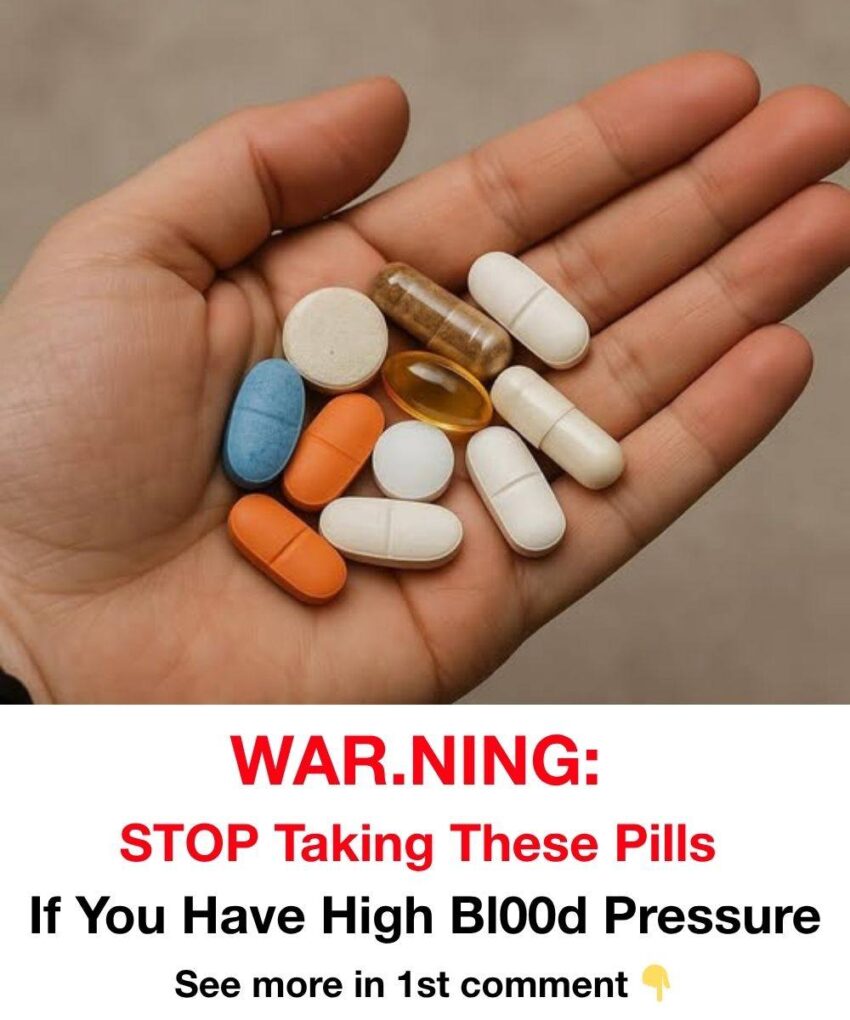
Messages like “STOP taking these pills if you have high blood pressure” are often clickbait, but there is a real concern: certain over-the-counter or prescription medications can worsen high blood pressure.
Here’s a breakdown based on medical guidance:
⚠️ Common Pills to Be Cautious With if You Have High Blood Pressure
1️⃣ NSAIDs (Non-Steroidal Anti-Inflammatory Drugs)
- Examples: ibuprofen, naproxen, diclofenac
- Risk: Can raise blood pressure, reduce effectiveness of some blood pressure medications, and stress kidneys
- Safer alternatives: acetaminophen (paracetamol) for pain, unless contraindicated
2️⃣ Decongestants
- Examples: pseudoephedrine, phenylephrine (in cold/flu medicines)
- Risk: Can cause significant blood pressure spikes, especially in sensitive individuals
3️⃣ Some Weight-Loss or Stimulant Pills
- Contain caffeine, synephrine, or other stimulants
- Risk: Increase heart rate and blood pressure
4️⃣ Certain Herbal Supplements
- Examples: licorice root, ginseng, ephedra (banned in many countries)
- Risk: Can raise blood pressure or interact with medications
5️⃣ Corticosteroids (Long-Term Use)
- Examples: prednisone
- Risk: Can increase blood pressure and blood sugar
✅ What You Should Do
- Always read labels — check for NSAIDs, stimulants, or decongestants.
- Talk to your doctor or pharmacist before starting any new medication or supplement.
- Monitor your blood pressure regularly if you take these medications.
- Report symptoms: headache, dizziness, chest discomfort, or rapid heartbeat.
🩺 Bottom Line
- Not all pills are dangerous for high blood pressure, but some common OTC drugs and supplements can raise it significantly.
- “Stop immediately” may not always apply — sometimes a safer alternative is available.
- Medical guidance is essential before discontinuing prescribed medications.
If you want, I can make a concise list of the 10 most common over-the-counter and herbal pills that can raise blood pressure, with safer alternatives.
Do you want me to do that?
