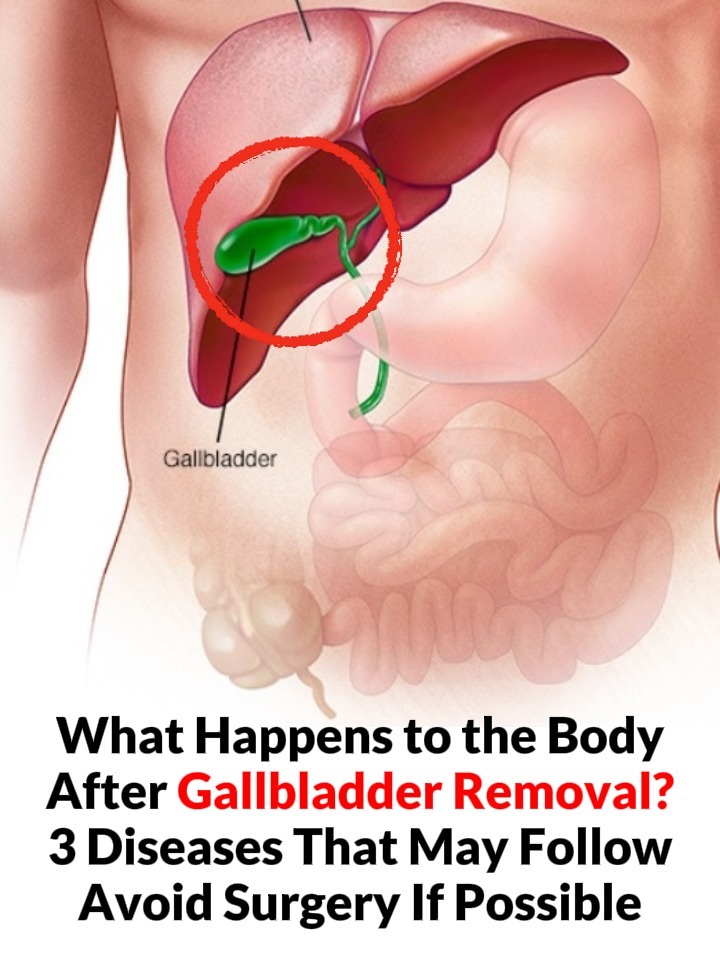
Gallbladder removal (cholecystectomy) is common and often necessary — but the title you shared reflects a real concern that’s often oversimplified online.
Here’s a clear, medically accurate explanation without fear-mongering.
What the Gallbladder Does (Quickly)
The gallbladder stores and concentrates bile, releasing it in pulses to help digest fats.
After removal:
- Bile drips continuously from the liver into the intestine
- Fat digestion still happens, but less efficiently for some people
Most people adapt well — but not everyone.
What Happens to the Body After Gallbladder Removal
Short-Term (Weeks–Months)
- Diarrhea or loose stools
- Bloating or gas
- Fat intolerance
- Urgency after meals
👉 Many of these improve as the body adapts.
3 Conditions That May Occur After Gallbladder Removal
Important: These are possible, not guaranteed.
1. Bile Acid Diarrhea (BAD)
Why it happens:
Constant bile flow irritates the colon.
Symptoms:
- Chronic diarrhea
- Urgency after meals
- Cramping
How common:
Up to 10–20% experience ongoing symptoms
Often mistaken for: IBS
2. Non-Alcoholic Fatty Liver Disease (NAFLD)
Why it may increase risk:
- Altered bile signaling
- Changes in fat metabolism
- Insulin resistance
Risk increases if you already have:
- Obesity
- Diabetes
- Metabolic syndrome
👉 This does not mean gallbladder removal causes liver disease — but it may unmask or worsen existing risk.
3. Small Intestinal Bacterial Overgrowth (SIBO)
Why:
Bile helps control bacteria. Constant low bile flow may allow overgrowth.
Symptoms:
- Bloating
- Gas
- Abdominal discomfort
- Brain fog
Should Surgery Be Avoided?
❗ No — when surgery is medically necessary
Gallbladder removal is life-saving for:
- Acute cholecystitis
- Gallbladder infection
- Pancreatitis from gallstones
- Blocked bile ducts
Delaying surgery in these cases can be dangerous.
⚖️ When Non-Surgical Options May Be Considered
Only in mild or early cases, under medical supervision:
- Dietary fat management
- Weight loss (gradual, not rapid)
- Medications (e.g., bile acid therapy)
- Monitoring asymptomatic gallstones
⚠️ Many “natural gallstone cleanses” online are unsafe or ineffective.
How to Support Your Body If the Gallbladder Is Removed
✔ Eat smaller, balanced meals
✔ Avoid very high-fat meals early on
✔ Increase soluble fiber (oats, chia, apples)
✔ Consider bile acid binders if prescribed
✔ Manage blood sugar & weight
✔ Support gut health gradually
Most people live completely normal lives post-surgery with the right adjustments.
Bottom Line
- Gallbladder removal changes digestion, but most adapt well
- Some people experience long-term digestive or metabolic issues
- Surgery should not be avoided when medically necessary
- In mild cases, conservative management may be discussed with a doctor
If you want, I can:
- Explain who adapts well vs who struggles
- Share a post-gallbladder diet plan
- Break down myths vs facts about gallstones
Just tell me 👍
