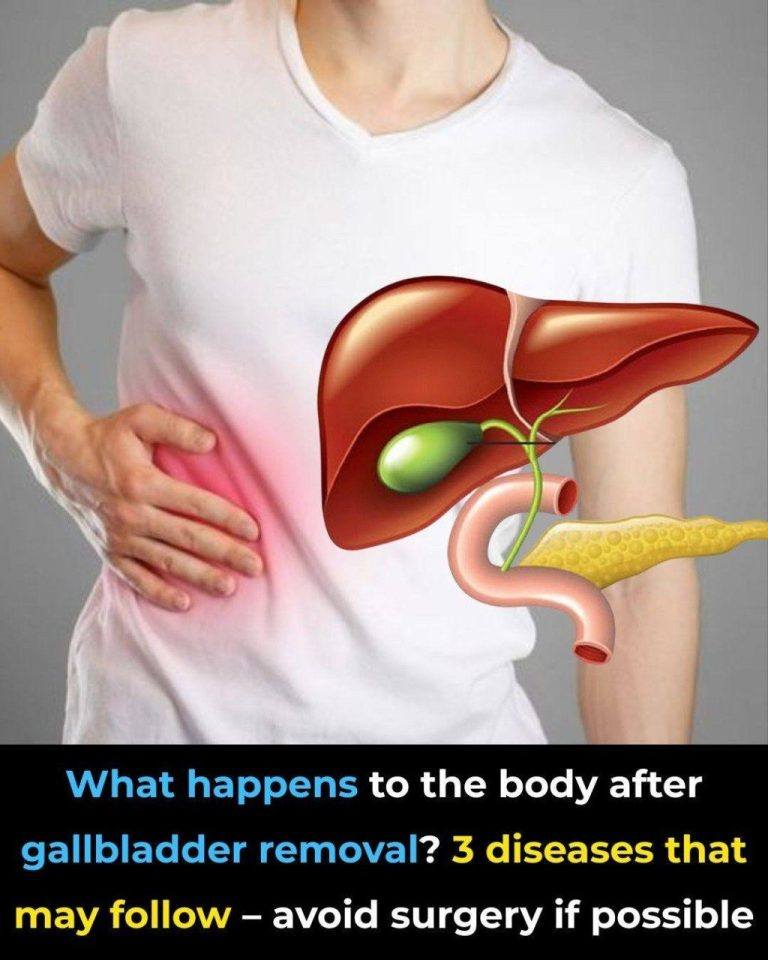
That headline is misleading. It’s designed to sound alarming, but it doesn’t reflect how gallbladder surgery actually works in medicine.
What really happens after gallbladder removal
The gallbladder stores bile; when it’s removed, bile flows directly from the liver into the intestine. Most people adapt well and live completely normal lives.
Common, real effects (not “new diseases”)
Some people may experience:
- Temporary diarrhea or loose stools (most common early on)
- Bloating or indigestion, especially after fatty meals
- Food sensitivity to greasy foods for a few weeks or months
- Post-cholecystectomy syndrome (a medical term for ongoing digestive symptoms in a small minority)
These are usually manageable and often improve over time.
About “3 diseases that may follow”
There is no medically accepted list of “three diseases caused by gallbladder removal.”
That framing is typically clickbait that mixes unrelated or weak associations with fear-based wording.
Research has explored possible associations in some people (not causes), such as:
- changes in bile flow affecting digestion
- slight shifts in gut bacteria
- rare bile duct or digestive complications if surgery issues occur
But these are not guaranteed outcomes and not separate diseases caused by the surgery itself.
Why surgery is usually done anyway
Gallbladder removal is recommended because untreated gallstones or inflammation can lead to:
- severe pain attacks
- infection (cholecystitis)
- bile duct blockage
- pancreatitis (can be serious)
So in many cases, surgery reduces risk rather than increases it.
Bottom line
- Most people recover well and live normally without a gallbladder
- Long-term serious problems are uncommon
- Headlines like “avoid surgery if possible” are misleading because doctors already recommend surgery only when benefits outweigh risks
If you want, I can explain what recovery feels like day-by-day or what diet actually helps after gallbladder removal.
