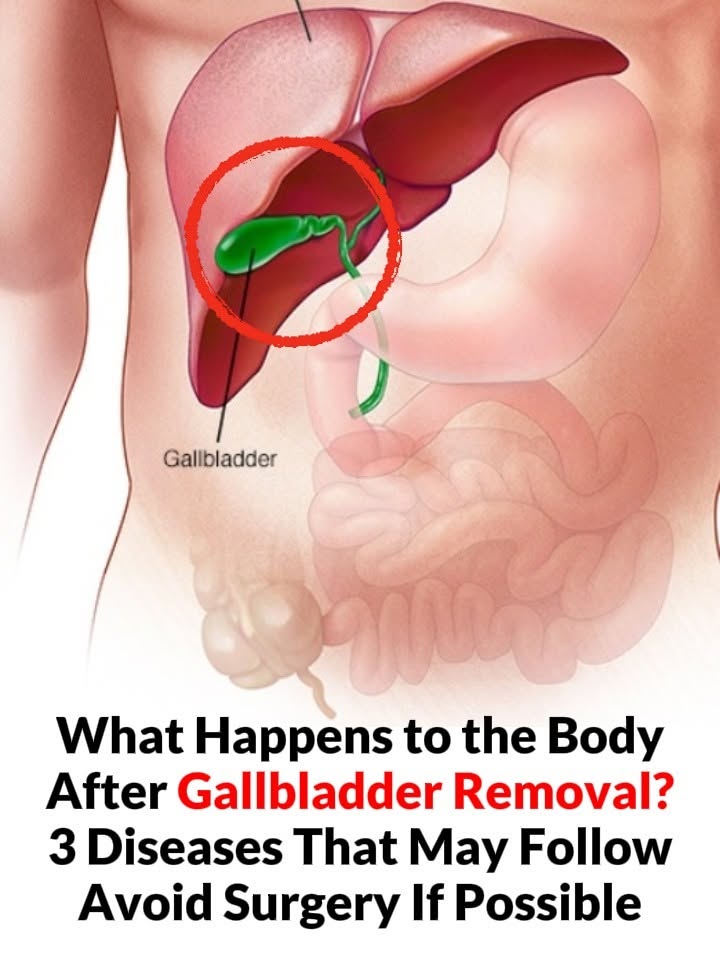
The claim “avoid gallbladder removal if possible because 3 diseases may follow” is misleading. Gallbladder removal (Cholecystectomy) is a common and generally safe procedure that is often recommended when gallstones or gallbladder disease cause repeated pain, infection, or other complications.
The gallbladder stores bile made by the liver. After removal:
- The liver continues producing bile.
- Bile flows directly into the small intestine instead of being stored and released in larger amounts after meals.
- Most people digest food normally and return to regular activities.
Some people may experience changes after surgery, such as:
- Digestive changes
- Loose stools, urgency, bloating, or gas can occur, especially in the first weeks or months.
- Many people improve as the body adapts.
- Bile-related diarrhea
- A small number of people develop ongoing diarrhea because bile reaches the intestine more continuously.
- This can often be managed with diet changes or medications if needed.
- Changes in fat digestion
- Very fatty meals may be harder to tolerate for some people, particularly soon after surgery.
There is no good evidence that gallbladder removal routinely causes a list of serious “new diseases” that can be avoided simply by refusing needed surgery. Delaying recommended surgery can sometimes be riskier, because untreated gallstones may lead to problems such as Cholecystitis, bile duct blockage, or Pancreatitis.
Whether surgery is appropriate depends on the individual situation—such as symptoms, test results, age, and overall health. People with gallstones that are causing symptoms should discuss the risks and benefits with a qualified healthcare professional rather than relying on viral claims.
