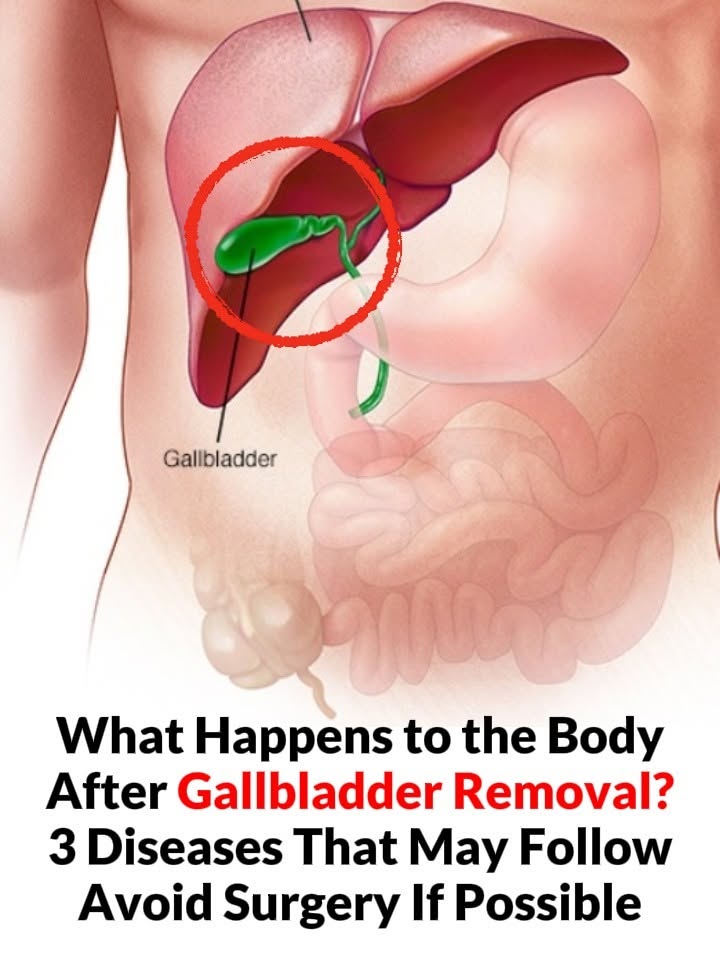
The headline “What Happens to the Body After Gallbladder Removal? 3 Diseases That May Follow – Avoid Surgery If Possible” is designed to create fear and is not an accurate summary of medical evidence.
Gallbladder removal (Cholecystectomy) is a common operation performed when gallstones or other gallbladder problems cause symptoms or complications. The body can function without a gallbladder because the liver continues making bile; the bile simply flows directly into the intestine instead of being stored.
After surgery, some people may notice:
- Temporary digestive changes
- Loose stools, gas, bloating, or discomfort after fatty meals can occur, especially early after surgery.
- Many people adapt over time.
- Bile acid diarrhea (in some people)
- A small percentage develop persistent diarrhea related to bile reaching the intestine more continuously.
- Treatments are available if this happens.
- Difficulty tolerating very fatty foods
- Some people find that large, greasy meals cause symptoms and may need to adjust their diet.
However, there is no evidence that gallbladder removal automatically causes three specific diseases that everyone should fear. Avoiding surgery when it is medically needed can carry risks, including repeated painful attacks, infection, blocked bile ducts, or complications such as Acute pancreatitis.
The decision to remove the gallbladder should be based on:
- Whether gallstones are causing symptoms
- The risk of complications
- Your overall health
- Your doctor’s assessment
If you have a specific “3 diseases” list from the post, share it and I can help check which claims are supported by evidence and which are myths.
