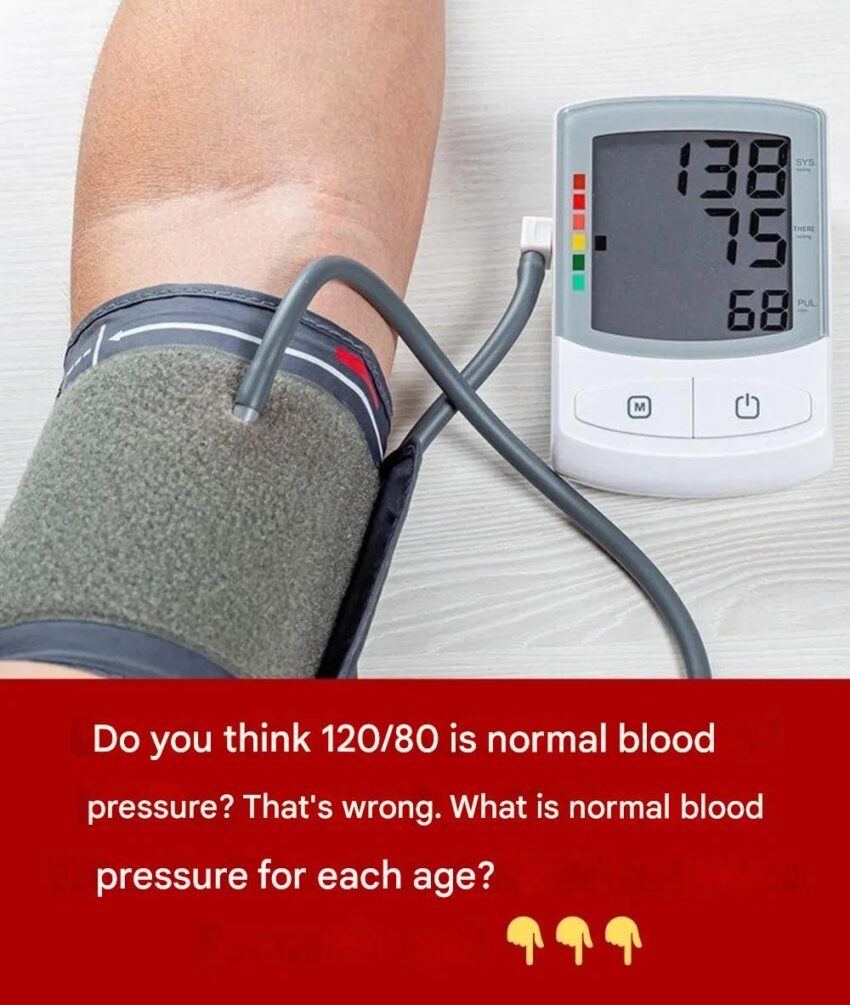
Normal blood pressure isn’t a single fixed number for everyone—it varies by age, health, and guidelines—but there are general ranges doctors use as a reference.
🩺 General Blood Pressure Categories (Adults)
- Normal: Less than 120/80 mmHg
- Elevated: 120–129 / less than 80
- High (Hypertension Stage 1): 130–139 / 80–89
- High (Stage 2): 140+/90+
👶 Children (0–12 years)
Blood pressure depends on age, height, and gender, so ranges are approximate:
- Infants (0–1 year): ~70–100 / 50–65
- Toddlers (1–3 years): ~90–105 / 55–70
- Preschool (3–5 years): ~95–110 / 60–75
- School-age (6–12 years): ~100–120 / 60–80
👦 Teenagers (13–17 years)
- Similar to adults:
- Normal: Less than 120/80
- Slightly higher readings may still be okay depending on growth
🧑 Adults (18–59 years)
- Ideal: Around 110–120 / 70–80
- Doctors generally aim to keep it below 120/80
👵 Older Adults (60+ years)
- Slightly higher can be acceptable:
- Typical target: Below 130–140 / 80–90
- Doctors balance blood pressure control with avoiding dizziness or falls
⚠️ Important Notes
- One high reading doesn’t mean you have hypertension.
- Consistent readings over time matter more.
- Conditions like diabetes or kidney disease may require stricter control.
If you want, tell me your age and recent readings—I can help interpret whether they’re in a healthy range.
