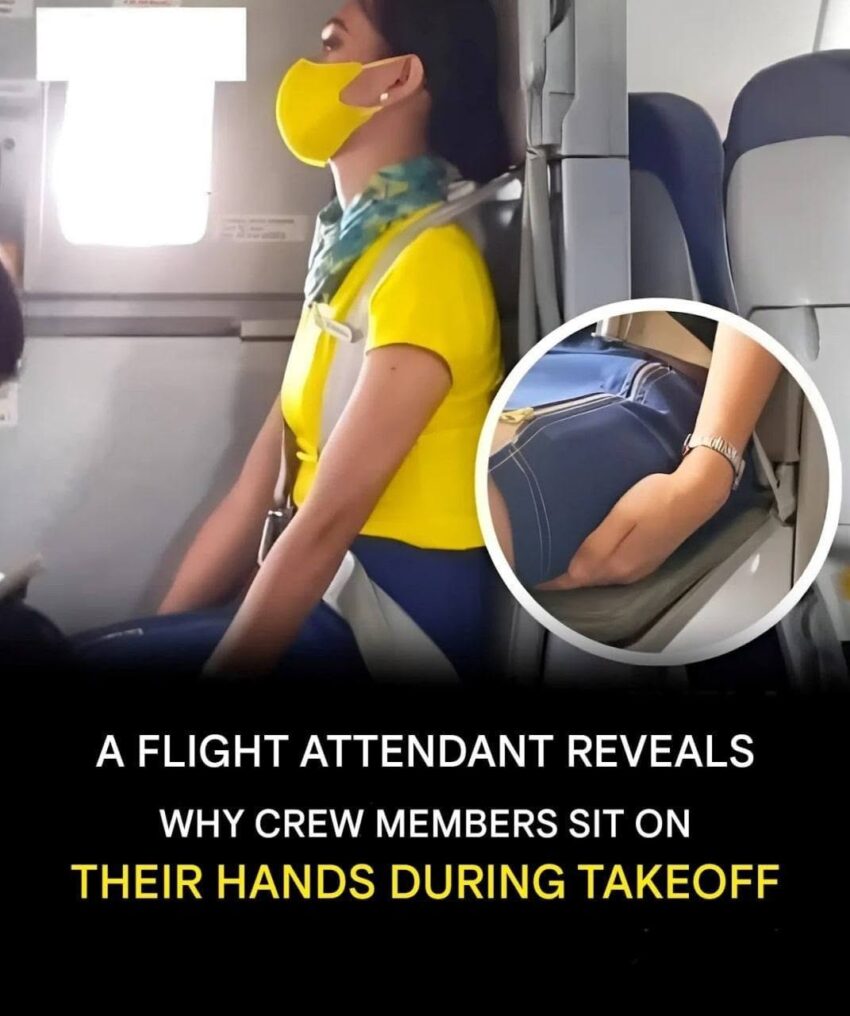
The idea that flight attendants keep their hands under their thighs during takeoff and landing is often shared online, but the explanation is usually simplified.
During takeoff and landing, some flight attendants may sit in the brace position required for crew members. This position is designed to help reduce injury risk if there is a sudden stop or impact.
The brace position typically involves:
- Sitting upright with the back against the seat
- Keeping feet flat or positioned as instructed
- Securing the body in a stable posture
- Keeping hands positioned according to the aircraft’s safety procedures
Some crew members may place their hands under their thighs because it helps:
- Keep their arms from flailing during a sudden deceleration
- Maintain a stable posture
- Reduce the chance of hand and arm injuries
The exact position can vary depending on the aircraft, airline procedures, and the type of jump seat. It is not because they are “secretly preparing for a crash” every time—the crew follows these procedures because takeoff and landing are statistically the phases of flight when most incidents occur, so safety protocols are emphasized.
