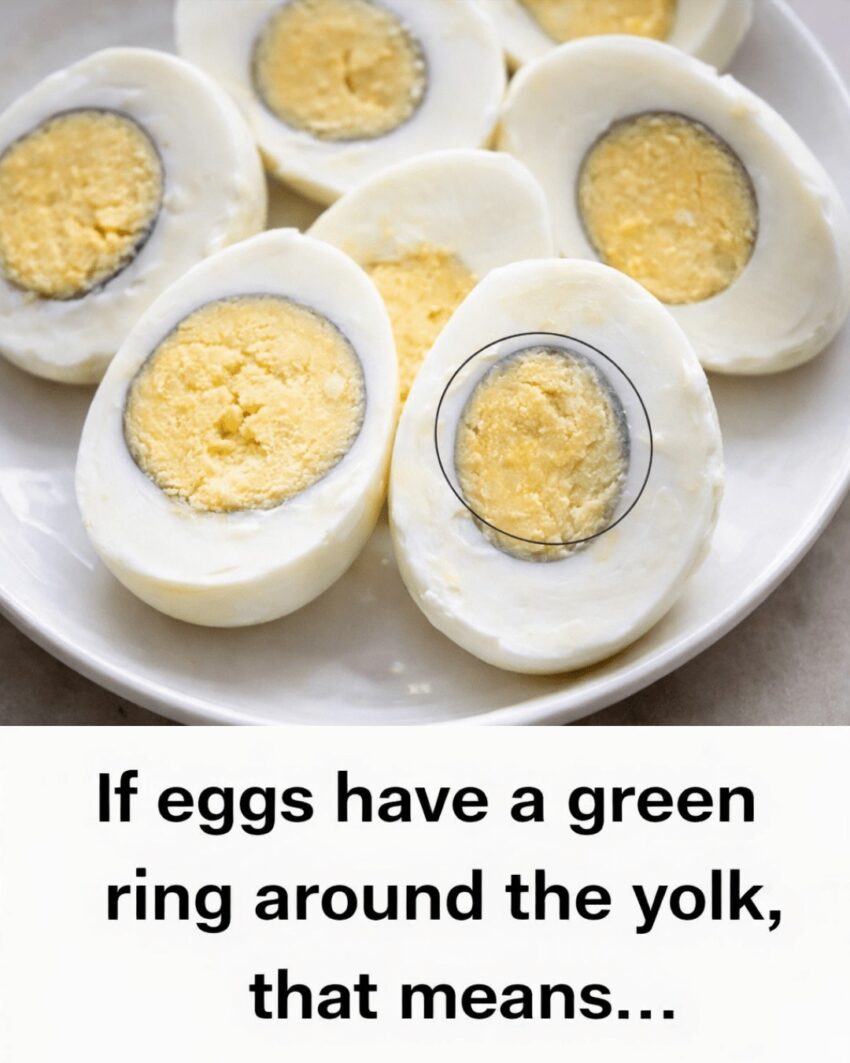
That green or gray ring around the yolk of a hard-boiled egg is a common phenomenon, and it’s completely safe to eat—though it can look unappetizing. Here’s the science behind it and tips to prevent it. 🥚
Why the Green Ring Appears
The green ring forms due to a chemical reaction between iron and sulfur:
- Eggs contain iron in the yolk and sulfur in the egg white.
- When eggs are overcooked or boiled at too high a temperature, the sulfur reacts with iron to form iron sulfide.
- This shows up as a green or gray layer around the yolk.
Key point: It’s harmless and safe to eat. It’s purely a visual issue.
How to Prevent the Green Ring
1. Don’t Overcook
- Boil eggs for 9–12 minutes, depending on size.
- Large eggs usually need 10 minutes for fully set yolks.
2. Cool Eggs Quickly
- After cooking, place eggs in ice water or cold running water for 5–10 minutes.
- This stops the cooking process and prevents the sulfur-iron reaction.
3. Avoid High Heat
- Bring eggs to a gentle boil rather than a vigorous rolling boil.
- High heat increases the chance of the green ring forming.
4. Store Properly
- Eggs can be stored in the fridge for up to one week after boiling.
- Don’t let them sit in hot water, which can continue cooking and cause discoloration.
✅ Extra tip: Peeling eggs under running cold water helps prevent the white from sticking to the shell.
Bottom line: A green ring is just a chemical reaction, not spoilage. Proper cooking and quick cooling keep your yolks bright yellow and creamy.
If you want, I can also show you a step-by-step foolproof method for perfectly cooked hard-boiled eggs with no green ring every time.
