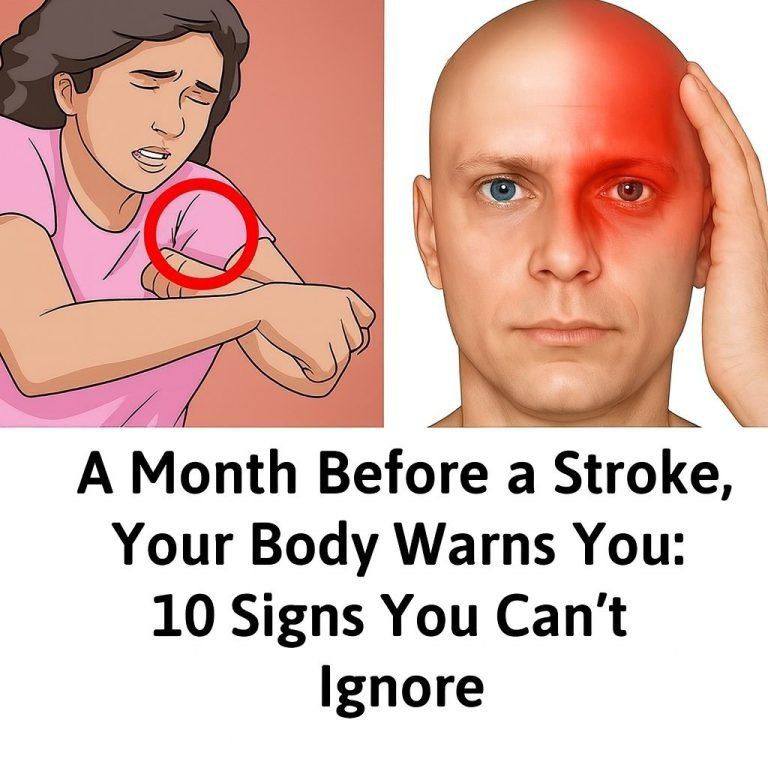
It’s important to say this clearly:
For most people, strokes do NOT come with a clear one-month warning. Many happen suddenly.
However, some people experience warning signs days or weeks before a major stroke, often in the form of a mini-stroke, called a Transient ischemic attack (TIA). A TIA is a medical emergency and a major red flag.
Here are 10 warning signs you should never ignore:
🚨 1️⃣ Sudden Weakness or Numbness (Especially One Side)
Face, arm, or leg — particularly on one side of the body.
🗣️ 2️⃣ Slurred or Confused Speech
Trouble speaking, forming words, or understanding others.
👁️ 3️⃣ Sudden Vision Problems
Blurred, double vision, or temporary loss of vision in one or both eyes.
🧠 4️⃣ Severe, Unusual Headache
A sudden, intense headache with no known cause (especially concerning for bleeding-type strokes).
🚶 5️⃣ Dizziness or Loss of Balance
Trouble walking, coordination problems, or unexplained falls.
😵 6️⃣ Brief Episodes That Resolve
Symptoms that last a few minutes and then disappear can still be a TIA.
Even if it goes away, it’s urgent.
💓 7️⃣ Irregular Heartbeat
Conditions like Atrial fibrillation significantly increase stroke risk.
💤 8️⃣ Sudden Extreme Fatigue
Unusual, unexplained exhaustion — more common in women before stroke.
🤯 9️⃣ Confusion or Memory Trouble
Sudden cognitive changes without explanation.
😖 🔟 Numbness or Tingling That Comes and Goes
Especially if localized to one side.
⚠️ Use the FAST Rule
Remember FAST:
- F – Face drooping
- A – Arm weakness
- S – Speech difficulty
- T – Time to call emergency services immediately
A stroke requires immediate medical treatment. Minutes matter.
🩺 Who Is at Higher Risk?
- High blood pressure (biggest risk factor)
- Diabetes
- Smoking
- High cholesterol
- Heart disease
- Family history
- Age over 55
❗ Critical Truth
There is no reliable “one month before” checklist that guarantees prediction.
But TIAs are powerful warnings — about 1 in 3 people who have a TIA will have a stroke, often within days.
If you’d like, I can also share:
- The difference between stroke and TIA
- Early warning signs that are more common in women
- Or how to lower your stroke risk starting today
