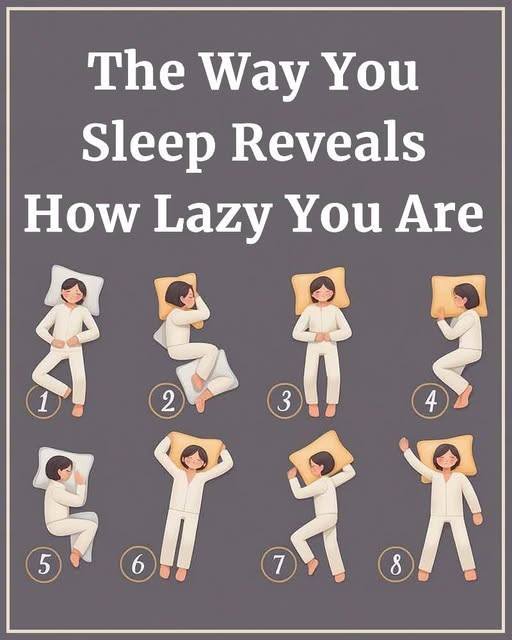
The idea that “your sleeping position reveals your true personality” comes mostly from surveys and pop-psychology—not from rigorous science. Still, it’s interesting to look at what’s claimed versus what actually has evidence behind it.
The popular claims (take these lightly)
Researchers like Chris Idzikowski once categorized common sleep positions and linked them to personality traits:
- Fetal position (curled on your side)
Said to be linked with people who appear tough on the outside but are sensitive underneath. Also associated with comfort-seeking. - Log position (lying straight on your side)
Claimed to be social, easygoing, and trusting. - Yearner position (side, arms stretched forward)
Supposedly linked to open-minded but sometimes cautious or skeptical personalities. - Soldier position (flat on your back, arms at sides)
Often described as disciplined, reserved, and quiet. - Starfish position (on back, arms up/out)
Claimed to be good listeners and supportive friends. - Freefall position (on stomach, arms around pillow)
Said to be outgoing, bold, but sometimes sensitive to criticism.
These descriptions sound convincing because they’re broad enough to fit many people (a classic psychological effect).
What science actually supports
There’s no strong, consistent evidence that sleep position reflects personality traits. Personality is usually studied using validated frameworks like Big Five personality traits (openness, conscientiousness, extraversion, agreeableness, neuroticism), and sleep posture doesn’t reliably correlate with these.
What is supported:
- Comfort and habit are the main drivers of sleep position
- Body structure, mattress, and injuries influence how you sleep
- Health conditions can shape position (e.g., people with sleep apnea often avoid back-sleeping)
Why people believe the personality link
- Humans like patterns and self-descriptions
- The traits listed are vague and relatable
- It feels intuitive (“I curl up → I must be protective or sensitive”)
What your sleeping position actually says about you
More realistically, it can hint at:
- How you manage comfort and temperature
- Whether you have back/neck issues
- Breathing or snoring tendencies
- Your sleep environment (pillow, mattress, stress level)
Bottom line
Sleeping position doesn’t decode your personality—it reflects your body’s preferences and physical needs. The personality angle is interesting to read, but it shouldn’t be taken as a meaningful psychological assessment.
If you want, tell me your usual position and I can explain what it might mean for your health and sleep quality instead—that’s where the real insights are.
